
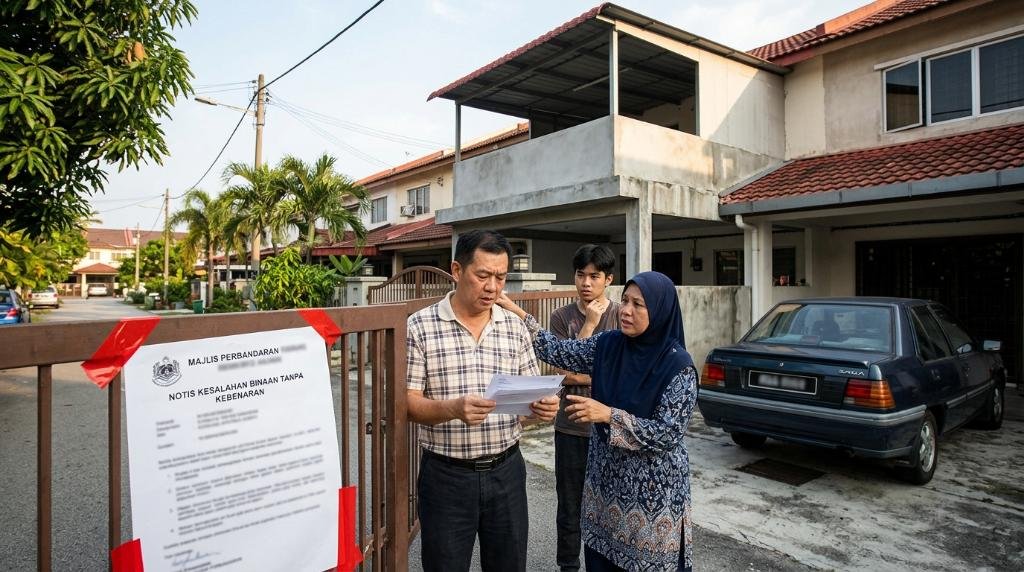
As a professional engineer inspecting properties across the Klang Valley, I frequently encounter a deeply ingrained cultural phenomenon in Malaysian real estate: the “extend first, ask later” approach to home renovations. Driven by the desire to maximize square footage, many property owners skip the crucial step of securing home renovation permits Malaysia, opting instead for quick, unapproved construction.
However, the landscape of municipal enforcement in 2026 is vastly different from a decade ago. Gone are the days when you could rely on a neighbor’s silence to keep your unapproved wet kitchen extension hidden. Today, the risks far outweigh the short-term financial savings, bringing a combination of severe legal penalties, compromised structural safety, and long-term financial distress.
Drone Surveillance Council Initiatives: The Eyes in the Sky
If you think your newly erected awning or extended boundary wall is hidden behind mature trees or high gates, think again. Local authorities across Selangor, Kuala Lumpur, and Penang have heavily integrated digital mapping into their urban planning and enforcement divisions. The implementation of drone surveillance council operations means aerial sweeps are now conducted routinely to compare existing neighborhood layouts against approved municipal blueprints.
Recent reports in publications like The Star highlight how authorities use high-resolution aerial photogrammetry to instantly flag properties that have encroached onto setbacks or drainage reserves. Once an anomaly is detected, a notice is automatically generated. You aren’t just evading a ground inspector anymore; you are trying to outsmart an automated sky-view audit.

Demystifying UBBL 1984 Compliance and Majlis Perbandaran Guidelines
A significant portion of illegal extension fines stems from a fundamental misunderstanding of the law. In Malaysia, all structural building works are governed by the Street, Drainage and Building Act 1974 (Act 133) and the Uniform Building By-Laws (UBBL) 1984. Securing proper home renovation permits Malaysia is not merely a bureaucratic hurdle; it is a statutory requirement designed to protect lives.
Before you lay a single brick, your architect or engineer must submit detailed structural and architectural plans that adhere to strictly enforced Majlis Perbandaran guidelines. These guidelines dictate essential safety factors, including:
- Building Setbacks: Mandatory minimum distances between your structure and the property line (usually 10 feet for the front and 5 feet for the sides/back, depending on your local council).
- Natural Ventilation and Lighting: Ensuring rooms meet the 10% minimum window area to floor area ratio for light, and 5% for ventilation, as per UBBL 1984.
- Fire Safety: Proper firewall construction (party walls) reaching up to the roof level to prevent fire spread between terrace houses.
Navigating these regulations requires professional insight. Utilizing experts from a reputable building inspection firm can provide clarity on whether your proposed changes align with current bylaws before you commit financially.
An Engineer’s Perspective: Why Unapproved Extensions Fail
From my professional experience on the ground, bypassing council approval almost always correlates with a bypassing of engineering standards. When homeowners hire unregistered contractors—bypassing CIDB (Construction Industry Development Board) requirements—they open the door to catastrophic structural failures.
Consider a typical back kitchen extension in the Klang Valley, an area notorious for soft, ex-mining soil. A qualified engineer will mandate specific pile foundations conforming to Malaysian Standards (MS) and British Standards European Norm (BS EN) for reinforced concrete. Unlicensed contractors, attempting to undercut costs, will often use shallow pad footings.
The result? Within two to three years, the extension undergoes differential settlement. The new structure sinks at a different rate than the main house. We frequently inspect properties where this has caused massive shear cracks tearing through the brickwork, leading to severe water ingress, spalling concrete, and ultimately, an uninhabitable space.

The Real Cost: Illegal Extension Fines and Demolition
Let’s talk numbers. Under Section 70(11) of the Street, Drainage and Building Act 1974, anyone who erects a building without prior written approval from the local authority is liable to a fine not exceeding RM25,000, plus a daily fine for every day the offense continues after conviction.
But the true financial blow comes from Section 72, which empowers the local council to order the immediate demolition of the illegal structure. If you fail to comply, the council will tear it down themselves and bill you for the demolition costs. A homeowner can easily sink RM80,000 into a luxurious extended kitchen, only to be slapped with heavy illegal extension fines and a demolition order. Furthermore, unapproved structural modifications will void your home insurance policy, leaving you completely uncovered in the event of a fire or collapse.
Protecting Your Asset
Do not let poor planning destroy your investment. The cost of hiring a registered draftsperson, architect, or engineer to secure your home renovation permits Malaysia is a fraction of the penalty for non-compliance. Always verify that your contractor is CIDB-registered, and never compromise on UBBL 1984 compliance.
If you are purchasing a sub-sale property, it is critical to determine if the previous owner obtained the necessary approvals for any existing extensions. Engaging professional defect inspectors to assess the property before you sign the Sale and Purchase Agreement (SPA) can save you from inheriting someone else’s legal and structural nightmare.
Frequently Asked Questions (FAQ)
What is the penalty for illegal home extensions in Malaysia?
Under the Street, Drainage and Building Act 1974, you can face fines up to RM25,000. Additionally, local councils have the authority to issue a demolition order, forcing you to tear down the unapproved structure at your own expense.
Do I need a permit for minor interior renovations?
While minor non-structural works like painting, replacing floor tiles, or installing built-in cabinets generally do not require a permit, any wall hacking, exterior extensions, plumbing relocation, or structural alterations legally require formal home renovation permits in Malaysia.
How are local councils detecting unapproved renovations?
Aside from neighbor complaints, modern Majlis Perbandaran guidelines now incorporate drone surveillance council operations. These aerial surveys compare real-time structural footprints with approved municipal blueprints to identify illegal setback encroachments and unauthorized roofing.
Avoid the Nightmare of Non-Compliance
Are you unsure if your planned extension violates municipal guidelines, or are you looking to buy a property and worried about existing illegal structures? Don’t leave your largest investment to chance.
Reach out to our experts today for professional advice and structural assessment:
WhatsApp 60168064902
