
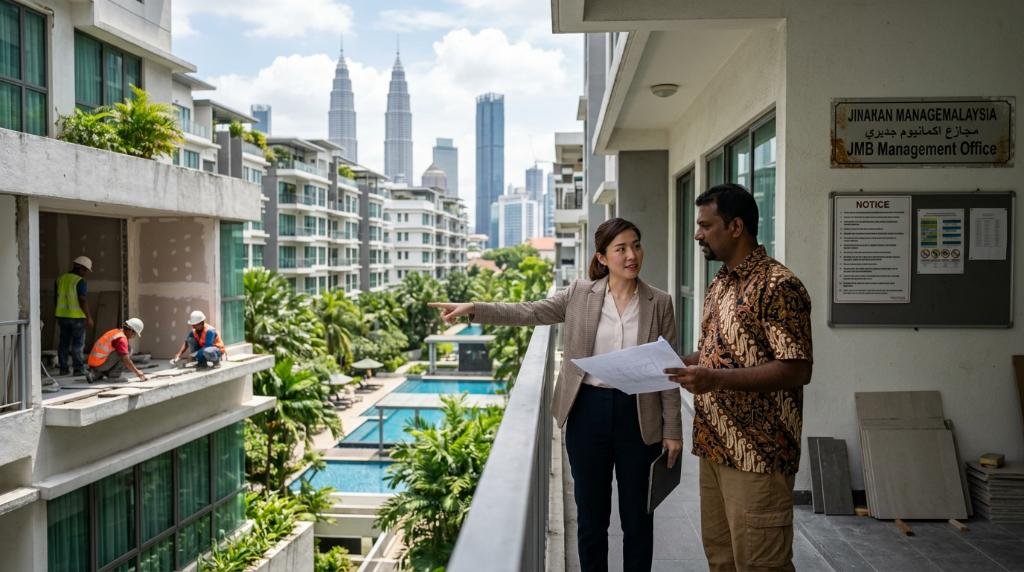
As a Professional Engineer practicing in Malaysia, I have witnessed countless dream condo renovations turn into expensive, drawn-out legal nightmares. Navigating condo renovation rules Malaysia requires far more than just picking out the right tiles and cabinets; it demands a deep understanding of structural integrity, engineering standards, and statutory laws.
Too often, property owners and overly ambitious interior designers overlook the engineering complexities of high-rise living. Unapproved structural hacking, subpar waterproofing, and unauthorized facade alterations regularly lead to stop-work orders, hefty fines, and worst of all, Joint Management Body (JMB) lawsuits. Today, we are taking an insider’s look at the critical strata regulations you must adhere to before a single sledgehammer swings.

The Power of the Strata Management Act 2013
When you purchase a strata title property in Malaysia, you don’t just buy a physical space; you buy into a collective community governed by strict statutory frameworks. The Ministry of Local Government Development (KPKT) enforces the Strata Management Act 2013 (SMA 2013), which dictates what you can and cannot do within your parcel.
Under the Third Schedule of the SMA 2013, the standard strata property by-laws clearly outline restrictions on facade alterations, common property encroachments, and nuisance to neighbors. The mistake many first-time condo buyers make is treating their unit like a landed property. In a high-rise, your floor is someone else’s ceiling, and your walls might be holding up the entire building.
If you flout the SMA 2013, the Management Corporation (MC) or JMB has the legal authority to halt your renovation, force you to reinstate the property to its original condition at your own cost, and sue you for damages. Ignorance of the law is never a valid defense in a strata tribunal.
The Engineering Reality of Hacking Guidelines Malaysia
This is where engineering principles and interior design often clash. I frequently receive calls from condo owners wanting to “just knock down this small wall” to create an open-concept kitchen. However, high-rise buildings in Malaysia are heavily reliant on shear wall structures designed in accordance with MS EN 1992 (Eurocode 2 for concrete structures).
Unlike conventional brick walls, reinforced concrete (RC) shear walls are critical load-bearing elements designed to resist lateral forces like high winds and minor seismic activities. Hacking guidelines Malaysia strictly prohibit the tampering, coring, or demolition of these structural elements without the explicit endorsement of a Professional Engineer (PE) and approval from local municipal councils (e.g., DBKL, MBPJ).
- Architectural Walls (Brick/Blockwork): Generally permissible to hack, subject to JMB approval and proper debris disposal.
- Structural Walls (RC Shear Walls): Strictly off-limits. Even minor chasing for electrical conduits must be carefully regulated to ensure rebar cover is not compromised, preventing long-term carbonation and steel corrosion.
Hiring a contractor registered with the Construction Industry Development Board (CIDB) is non-negotiable. An unqualified contractor taking a jackhammer to a shear wall can compromise the entire building block, leading to catastrophic liabilities.
Inter-floor Leakage: The Ultimate Wet Works Trap
If there is one issue that causes more neighborly disputes and JMB lawsuits than anything else in Malaysia, it is inter-floor leakage. Upgrading a bathroom or shifting a kitchen sink requires extensive wet works. If the contractor fails to apply proper waterproofing membranes or test them via ponding tests (as dictated by local building standards), water will eventually seep into the unit below.
What many homeowners do not realize is that Section 142 of the Strata Management Act 2013 contains a statutory Presumption of Inter-Floor Leakage. If a leak appears on the ceiling of the unit directly below yours, the law presumes the defect originated from your parcel unless you can definitively prove otherwise. Defending against this presumption is nearly impossible if you executed unauthorized renovations.
To avoid this, ensure your contractor applies highly elastic, cementitious, or polyurethane waterproofing membranes that comply with local Malaysian Standards (MS) and British Standards (BS EN). Furthermore, insist on a 24-to-48 hour ponding test before any tiling works commence.

Navigating the JMB Approval Renovation Process
Achieving a smooth JMB approval renovation process requires proactive documentation and transparency. JMBs are notoriously strict, not out of malice, but because they hold fiduciary duty over the building’s safety and the residents’ comfort. To streamline your approval, prepare the following dossier:
- Detailed Floor Plans: Clearly demarcating areas to be hacked, highlighting that no structural columns, beams, or shear walls are affected.
- Method Statement: A step-by-step document from your CIDB-certified contractor explaining how dust, noise, and debris will be managed.
- Professional Endorsements: If any structural modifications or significant electrical rewiring is planned, include endorsement letters from a PE or a certified Suruhanjaya Tenaga (ST) wireman.
- Renovation Deposit: Be prepared to place a refundable security deposit. This ensures that any damage to common areas (like lifts or corridors) during the transportation of materials is covered.
Attempting to bypass the JMB by sneaking materials in through the basement car park is a recipe for disaster. As highlighted in numerous local news reports, aggressive enforcement by management bodies frequently results in heavy penalties and immediate suspension of access cards for errant owners.
Frequently Asked Questions (FAQs)
Do I need JMB approval for all condo renovations in Malaysia?
Yes, under the standard strata property by-laws, any major renovation—especially those involving wet works, electrical rewiring, or hacking—requires prior JMB approval renovation processes to ensure the safety of the building and minimal disruption to neighbors.
Can I legally hack condo walls in Malaysia?
It depends on the wall type. Architectural non-load-bearing walls (like brickwork) can generally be modified, but structural elements like shear walls and columns cannot be tampered with. All work must strictly follow hacking guidelines Malaysia and be endorsed by a Professional Engineer.
What happens if my renovation causes a leak in the unit below?
Under the Strata Management Act 2013, there is a statutory presumption of inter-floor leakage. The burden of proof typically falls on the upper floor owner to prove their renovation did not cause the leak, making strict adherence to waterproofing standards critical.
Conclusion: Don’t Let Your Dream Home Become a Liability
Understanding condo renovation rules Malaysia is the foundational step to a successful property upgrade. By respecting the Strata Management Act 2013, engaging certified professionals, and adhering rigorously to structural and waterproofing guidelines, you protect your investment from costly tribunal disputes and JMB lawsuits.
At Pro Inspect Solution, we advocate for total compliance and engineering excellence in every property endeavor. Don’t leave your structural safety to chance or rely on the word of a contractor who isn’t familiar with engineering codes.
Need Expert Guidance on Your Property?
Ensure your home modifications are structurally sound and strictly compliant with Malaysian strata laws.
