
By Ir Vimal, Professional Engineer | May 24, 2026
The Reality of Construction Costs in Malaysia
Managing construction costs Malaysia is a high-stakes endeavor. Developers and main contractors are caught in a perpetual squeeze between fluctuating raw material prices, stringent regulatory requirements, and tight project timelines. While many project managers focus heavily on labor logistics and procurement contract negotiations, one of the most significant—yet frequently overlooked—areas of cost control lies directly in the materials forming the skeleton of the building: the concrete.
In my years of engineering consultancy and failure analysis across the Peninsula and East Malaysia, I have observed a recurring theme. The margin erosion doesn’t always happen at the negotiation table; it bleeds out on the site due to poor quality control. When you don’t control the source of your concrete, you surrender your project’s financial predictability.
Why Cube Tests Are a Dangerous Lagging Indicator
The standard industry practice is to rely on the 28-day compressive strength cube tests (as per BS EN 12390-3 or MS 26). But here is the insider reality: relying exclusively on cube tests is a fatal flaw in project management. By the time you discover that your concrete has failed to achieve its targeted characteristic strength, the structure has already been cast, the formwork struck, and construction has progressed to upper tiers.
What happens next? Work halts. CIDB (Construction Industry Development Board) compliance is jeopardized, structural engineers mandate expensive non-destructive testing (NDT) like coring or rebound hammers, and ultimately, you face the staggering cost of hacking and retrofitting. This is entirely preventable if you shift your focus from reactive testing to proactive source verification through a rigorous ready-mix batching plant audit.

The Anatomy of a Ready-Mix Batching Plant Audit
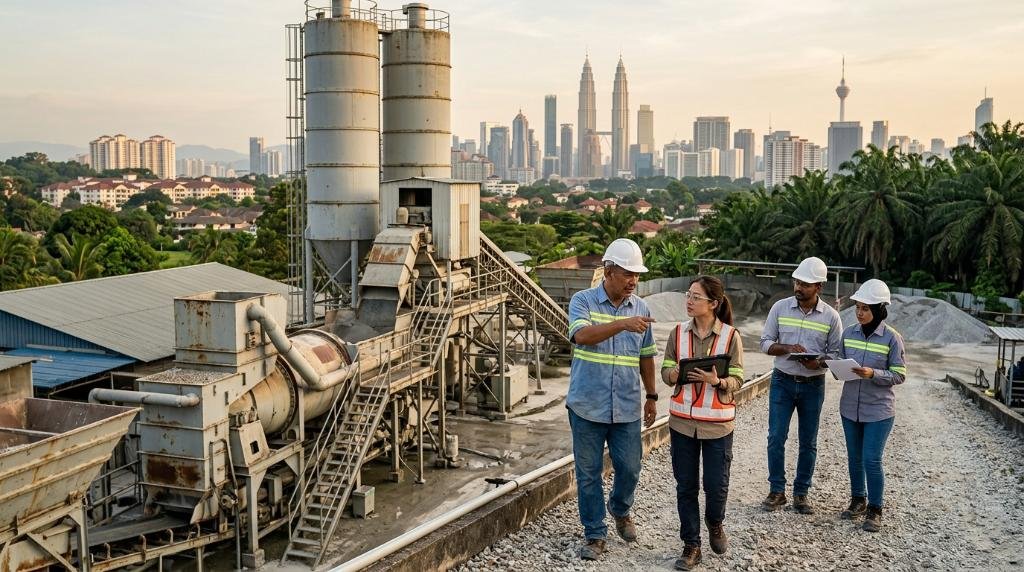
An effective audit goes far beyond checking delivery dockets. It requires a forensic look at the plant’s operational adherence to MS EN 206 standards. When Pro Inspect Solution conducts these audits, we are hunting for discrepancies that silently degrade concrete quality and inflate costs.
1. Aggregate Moisture Content and Weigh Batcher Calibration
One of the most common failures in Malaysian batching plants is the mismanagement of aggregate moisture content, especially during our heavy monsoon seasons. If the plant does not adjust the free water in the batching system to account for wet aggregates, the concrete will arrive on-site with a high water-cement ratio, drastically reducing its strength.
Furthermore, out-of-calibration weigh batchers mean you might not be getting the exact volume of cementitious materials you paid for. An audit ensures that calibration certificates are current and verified against standardized weights, protecting your material costs from systemic plant inaccuracies.
2. Optimizing the Concrete Mix Design
Another major lever for controlling construction costs Malaysia is the concrete mix design itself. Many contractors accept generic mix designs proposed by suppliers without scrutiny. By engaging in professional Concrete Technology Consultancy, we evaluate the mix design to ensure it meets performance requirements without over-specifying cement content.
For instance, substituting a calculated percentage of Ordinary Portland Cement (OPC) with approved supplementary cementitious materials like Pulverised Fuel Ash (PFA) or Ground Granulated Blast-furnace Slag (GGBS)—in compliance with Malaysian Standards—can significantly reduce thermal cracking risks in mass concrete pours while driving down material costs.
Navigating Material Costs and Initiatives like Simen Rahmah
In recent years, the Malaysian government introduced the Simen Rahmah initiative, a collaborative effort with cement manufacturers to offer subsidized cement for affordable housing developments. While initiatives like Simen Rahmah provide a vital buffer for eligible developers building homes under RM300,000, commercial and high-end residential developers do not have this luxury.
For the broader market, managing the volatility of material costs requires precision engineering. You cannot control global supply chain disruptions affecting raw cement, but you can absolutely control the yield and wastage on your project by ensuring your batching plant is running at peak efficiency.

The Downstream Cost: Structural Failures and DLP
What is the ultimate price of skipping a plant audit? It usually manifests months later during the Defect Liability Period (DLP). Low-quality concrete leads to excessive shrinkage cracks, water seepage in basements, and spalling. Dealing with these defects requires significant capital and severely damages your reputation with buyers.
Through our comprehensive property defect inspection (DLP) services, we frequently trace systemic building defects right back to the initial concrete pours. Rectifying a concrete-related defect post-handover costs exponentially more than the fee for auditing the batching plant on day one. Proactive quality assurance is the cheapest insurance policy a developer can buy.
Safeguard Your Project with Pro Inspect Solution
Managing construction costs Malaysia is not about cutting corners; it is about eliminating waste and preventing catastrophic rework through expert oversight. At Pro Inspect Solution, we bring unparalleled civil engineering expertise to your project. From evaluating your concrete mix design to conducting exhaustive plant audits and site inspections, we ensure your structural integrity is never compromised.
Stop relying on lagging indicators. Secure your project’s profitability today by engaging our specialized Concrete Technology Consultancy services.
Ready to optimize your concrete operations?
Contact Ir Vimal directly for an expert consultation.
Frequently Asked Questions
How do plant audits impact construction costs in Malaysia?
Plant audits catch material inconsistencies and poorly calibrated equipment before concrete is poured. This prevents low-strength concrete failures that lead to expensive hacking, rebuilding, and project delays, ultimately safeguarding your profit margins.
What is checked during a ready-mix batching plant audit?
An audit thoroughly reviews the calibration of weigh batchers, raw material storage conditions, moisture content in aggregates, cementitious material certificates, and the approved concrete mix design according to MS EN 206 and CIDB standards.
Can an optimized concrete mix design save money?
Yes. A proper mix design avoids over-specifying cement quantities by utilizing approved supplementary cementitious materials where permissible, thereby reducing overall material costs while maintaining the targeted structural strength and durability.
What happens if a contractor skips batching plant inspections?
Skipping inspections forces reliance on lagging indicators like 28-day cube tests. If the concrete fails the test, the structure is already built. This leads to massive rectification costs, project standstills, and extensive issues requiring property defect inspection (DLP) remediation later on.
