
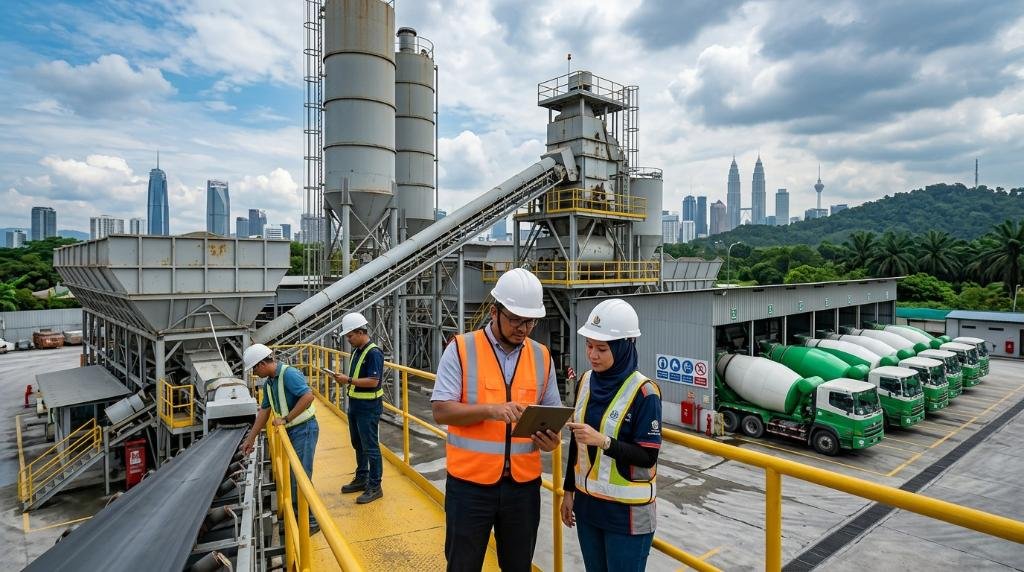
Exclusive Insider Insight for Malaysian Property Owners, Developers, and Contractors

Key Trends in Concrete Safety Protocols for 2026
The landscape of batching plant audits has evolved significantly. Regulators and top-tier developers are no longer satisfied with surface-level compliance. Today’s concrete safety protocols are rigorously scrutinized through multi-disciplinary engineering audits.
1. Silo and Hopper Structural Integrity
Cement silos are subjected to immense dynamic loads and harsh environmental conditions. In Malaysia’s high-humidity environment, internal condensation combined with abrasive cement particles accelerates corrosion and structural fatigue. A failing silo doesn’t just risk a catastrophic collapse (a severe hazard to plant workers); it also leads to moisture contamination, compromising the cementitious properties before the mixing even begins.
To mitigate this, modern audits are moving away from visual scaffolding checks. We are increasingly deploying Façade & Roof Inspection (Drone) technologies to conduct high-resolution, close-proximity structural assessments of silos, aggregate bins, and elevated conveyor systems without putting human inspectors at risk.
2. Silica Dust Control and Occupational Hazards
Respirable crystalline silica remains a primary focus for DOSH inspectors. Batching plants that fail to maintain their dust suppression systems, baghouse filters, and enclosure seals are immediate targets for JKKP safety notices. Poor dust control not only jeopardizes the respiratory health of operators but frequently results in community complaints when plants are located near urban or suburban developments.
3. Mixer Truck Fleet Safety and Washout Management
An audit doesn’t stop at the static plant machinery. The condition of the transit mixer trucks—specifically the hydraulic chute mechanisms, reverse alarms, and the management of washout wastewater—is highly scrutinized. Environmental Quality Act compliance goes hand-in-hand with safety protocols in today’s holistic audits.
Why Plant Safety Directly Impacts Construction Site Safety
There is a dangerous misconception among some developers that batching plant operations are purely the supplier’s problem. From a forensic engineering perspective, this couldn’t be further from the truth. The correlation between a poorly maintained plant and poor construction site safety is direct and undeniable.
When a batching plant suffers unexpected downtime due to safety violations or mechanical failure, the supply chain breaks. Mixers arrive late, leading to cold joints in sheer walls or foundation rafts. Furthermore, a plant with uncalibrated weigh batchers—often an indicator of broader safety negligence—will produce inconsistent concrete yields. If the water-cement ratio is compromised because the plant’s moisture sensors failed, the resulting concrete may suffer from severe shrinkage cracking or fail its 28-day compressive strength test.
This is precisely why engaging expert concrete technology consultants is vital. We analyze not just the hardened material on-site, but the capability and safety record of the source plant itself.

CIDB, MS EN 206, and Material Compliance
In Malaysia, the standardization of concrete is governed primarily by MS 523 and the adopted MS EN 206 standards. CIDB Malaysia mandates that ready-mix concrete suppliers adhere to strict quality control systems (such as CIS 21).
During thorough batching plant audits, engineers evaluate whether the plant’s quality manual aligns with practical safety operations. Are the aggregate stockpiles properly separated to prevent cross-contamination? Are the admixtures stored at safe temperatures? Failing to align operational safety with material quality standards doesn’t just invite regulatory fines; it renders the supplied concrete structurally non-compliant, leaving the developer legally and financially vulnerable.
Insider Take: What Developers Must Demand from Suppliers
As industry experts in building diagnostics and structural materials, our advice to Malaysian property developers and Main Contractors is simple: Stop commoditizing your concrete procurement.
Do not base your supplier choice solely on the cheapest price per cubic meter. Demand transparency regarding their recent JKKP safety notices and audit histories. Request documentation on how they conduct structural checks on their silos—are they using traditional visual checks, or are they employing advanced drone roof inspections and NDT (Non-Destructive Testing) methods to ensure zero operational failure?
Quality concrete requires a safe, meticulously maintained environment. A supplier cutting corners on plant safety is inevitably cutting corners on your concrete mix design.
Conclusion & Professional Consultation
The state of ready mix concrete Malaysia is intrinsically linked to the rigor of plant safety audits. By understanding the trends in concrete safety protocols, developers can proactively mitigate risks associated with delayed deliveries, structural defects, and site accidents.
If you are experiencing inconsistent concrete quality on your site, or if you need to pre-qualify a batching plant before a massive pour, professional intervention is necessary. Let our engineers assess the root cause of your material issues.
Ensure Your Project’s Structural Integrity Today
Don’t leave your structural safety to chance. Leverage our Concrete Technology Consultancy to audit, assess, and rectify material compliance issues before they become catastrophic failures.
Contact Ir Vimal and the Pro Inspect Solution team directly:
Frequently Asked Questions (FAQ)
Why are batching plant audits crucial for ready mix concrete in Malaysia?
Batching plant audits ensure that facilities comply with DOSH/JKKP regulations and MS EN 206 standards. This guarantees both worker safety and the structural integrity of the concrete supplied to your site, preventing issues like inconsistent mix proportions and contamination.
What triggers JKKP safety notices at concrete plants?
Authorities issue JKKP safety notices for severe violations such as inadequate silica dust control (a major respiratory hazard), compromised structural integrity of cement silos, uncalibrated heavy machinery, and poor site traffic management.
How do plant safety protocols impact construction site safety?
A poorly maintained plant often produces inconsistent concrete mixes or suffers from mechanical breakdowns. This leads to on-site delays, rushed pouring schedules, cold joints, and potential structural failures that directly jeopardize the safety of construction workers and end-users.
Can drone technology be used in batching plant audits?
Yes. Advanced drone technology is highly effective for inspecting towering cement silos, elevated conveyor belts, and aggregate bins. It allows engineers to identify corrosion, structural fatigue, and blockages without subjecting inspectors to high-risk scaffolding climbs.
