
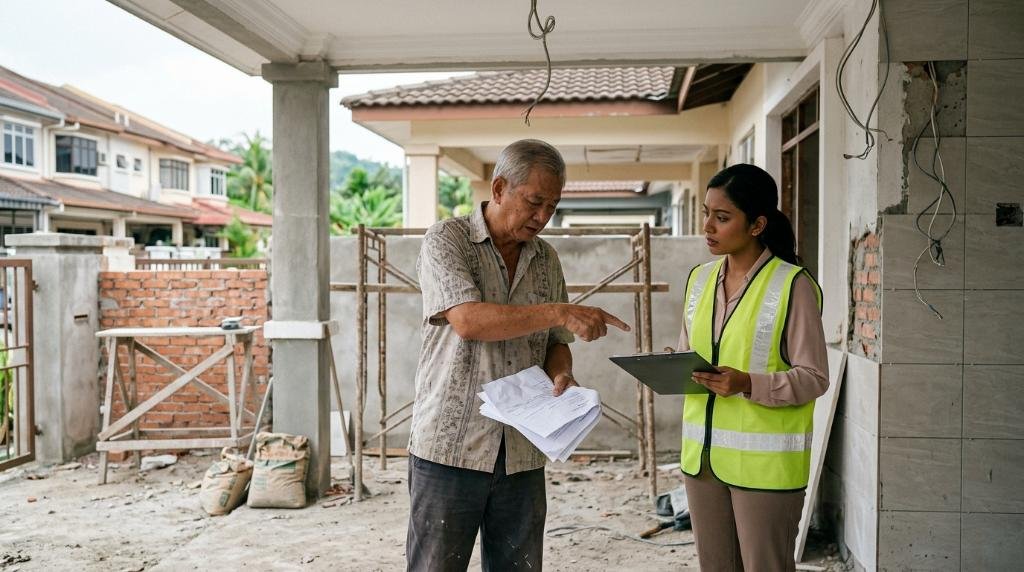
In my years of practice as a Professional Engineer traversing construction sites and residential developments across the Klang Valley and beyond, I have witnessed a heartbreaking trend. Innocent Malaysian homeowners are bleeding thousands—sometimes hundreds of thousands—of Ringgit due to unscrupulous renovation practices. The dream of upgrading a property frequently devolves into a nightmare of abandoned projects, structural hazards, and legal dead ends.
The Malaysian property landscape is unique. While our skylines boast world-class architecture, the unregulated underbelly of the residential renovation sector is fraught with risks. In 2026 alone, mainstream media outlets like The Star continue to report alarming spikes in consumer tribunal cases related to renovation fraud. But as an engineer, I can tell you that the true scam isn’t always the contractor who takes your deposit and runs. More often, the “scam” is what they leave behind: dangerous, non-compliant work masked by a fresh coat of premium paint.
To combat this, a proactive building condition assessment is no longer an optional luxury—it is a critical shield for your investment.
The Anatomy of a Renovation Scam in Malaysia
Most property owners assume that if a firm has a slick Facebook page and a Suruhanjaya Syarikat Malaysia (SSM) certificate, they are legitimate. This is a dangerous misconception. In Malaysia, any legally operating renovation contractor Malaysia must be registered with the Construction Industry Development Board (CIDB) under Act 520. An SSM registration merely proves they are a registered business; it says absolutely nothing about their technical competency to alter your home’s structural load or handle high-voltage electrical routing.
A common insider tactic among fraudulent contractors is the “deposit heavy, delivery light” strategy. They quote a highly competitive price, demand a 40% to 50% mobilization deposit, and then sub-contract the work to unskilled, undocumented laborers. When the project inevitably hits a snag—or when major building defects start showing up before completion—the main contractor vanishes, leaving the homeowner with a structurally compromised site and zero accountability.

The High Cost of Poor Workmanship
The most pervasive issue I encounter isn’t total abandonment; it is criminal levels of poor workmanship. Cosmetic fixes are often used to conceal catastrophic structural deviations. For example, a contractor might use substandard concrete grades (well below the expected Grade 25 or 30 for load-bearing structures) or skip the application of crucial waterproofing membranes in wet areas, simply applying a cheap PU injection as a band-aid when leaks inevitably occur.
These practices violate both Malaysian Standards (MS) and the adopted British Standards (BS EN) for construction materials and execution. When contractors bypass the Department of Standards Malaysia (JSM) guidelines, the resulting poor workmanship accelerates wear and tear. What looks like a minor hairline crack today can lead to severe concrete spalling, compromising the structural reinforcement bars due to oxidation. Over time, rectifying these foundational errors costs exponentially more than the initial renovation.
Why a Building Condition Assessment is Non-Negotiable
So, how do you protect yourself? As an industry expert, my foremost recommendation is to never release your final milestone payment without conducting a professional building condition assessment.
Unlike a superficial walkthrough by a layman, an engineering-led assessment scrutinizes the property through a forensic lens. At Pro Inspect Solution, our comprehensive evaluations involve checking:
- Structural Integrity: Assessing load-bearing walls, beam deflections, and foundation stability.
- M&E Compliance: Ensuring mechanical and electrical routing adheres to Suruhanjaya Tenaga (Energy Commission) guidelines.
- Waterproofing and Plumbing: Utilizing thermal imaging and moisture meters to detect hidden seepages before they ruin your custom carpentry.
- Material Verification: Ensuring the materials specified in your contract are actually the ones installed.
This assessment acts as indisputable, third-party documented proof. If you need to take a rogue contractor to the Tribunal for Consumer Claims Malaysia (TTPM) or pursue civil litigation, an engineer’s report is your strongest piece of evidence.
Modern Solutions: Catching Façade and Roof Flaws Early
Renovation issues aren’t confined to the interior. For landed properties expanding vertically or high-rise strata owners dealing with inter-floor leakage, the exterior envelope of the building is just as critical. Many contractors cut corners on roof pitches, flashing installations, and external weatherproofing, assuming homeowners won’t climb a three-story ladder to check their work.

This is where modern engineering technology bridges the gap. By utilizing a Façade & Roof Inspection via Drone, we can safely and accurately assess inaccessible areas. High-resolution sensors and thermal imaging can pinpoint exact areas of water ponding, compromised roof tiles, and defective façade sealants that would otherwise remain invisible until a major tropical monsoon causes a catastrophic ceiling collapse inside your newly renovated space.
Expert Guidelines to Bulletproof Your Project
To navigate the minefield of property upgrades in Malaysia, I advise my clients to adhere strictly to these rules:
- Verify CIDB Registration: Always check your contractor’s status on the official CIDB CIMS portal. Ensure their grading (G1 to G7) matches the financial scale of your project.
- Implement a Defect Liability Period (DLP): Never sign a contract that doesn’t explicitly outline a DLP of at least 6 to 12 months. Ensure a retention sum (typically 5% of the contract value) is withheld until the DLP expires.
- Document Everything: Keep all communication in writing. Avoid relying solely on verbal agreements or informal WhatsApp voice notes for variation orders (VO).
- Engage Independent Experts: Schedule a property renovation inspection at critical milestones (e.g., post-wiring/piping before plastering, and pre-handover). Independent verification ensures that your contractor cannot hide poor workmanship behind drywall and tiles.
Frequently Asked Questions (FAQ)
What is a building condition assessment?
A building condition assessment is a comprehensive engineering evaluation of a property to determine its structural integrity, safety, and compliance with Malaysian building standards. It is designed to identify hidden building defects, poor workmanship, and code violations before they escalate into costly hazards.
How can I verify if a renovation contractor in Malaysia is legitimate?
You should verify that any renovation contractor Malaysia is actively registered with the Construction Industry Development Board (CIDB). You can check their company name and registration grade on the official CIDB CIMS online portal. Do not rely solely on an SSM business registration.
When should I schedule a property renovation inspection?
It is highly recommended to schedule a property renovation inspection before releasing your final milestone payment or officially taking handover of the site. Engaging professionals to document defects ensures the contractor rectifies all issues under the agreed defect liability period.
Protect Your Investment Today
Do not let your hard-earned money fall victim to renovation scams and subpar construction standards. At Pro Inspect Solution, we leverage our deep engineering expertise to hold contractors accountable and ensure your property is safe, compliant, and built to last.
Whether you need a comprehensive building condition assessment for your interior or a specialized façade & roof inspection to safeguard your building’s exterior, our certified team is ready to assist.
Ready for total peace of mind?
