
By Ir Vimal
The Evolving Face of Renovation Scams in Malaysia
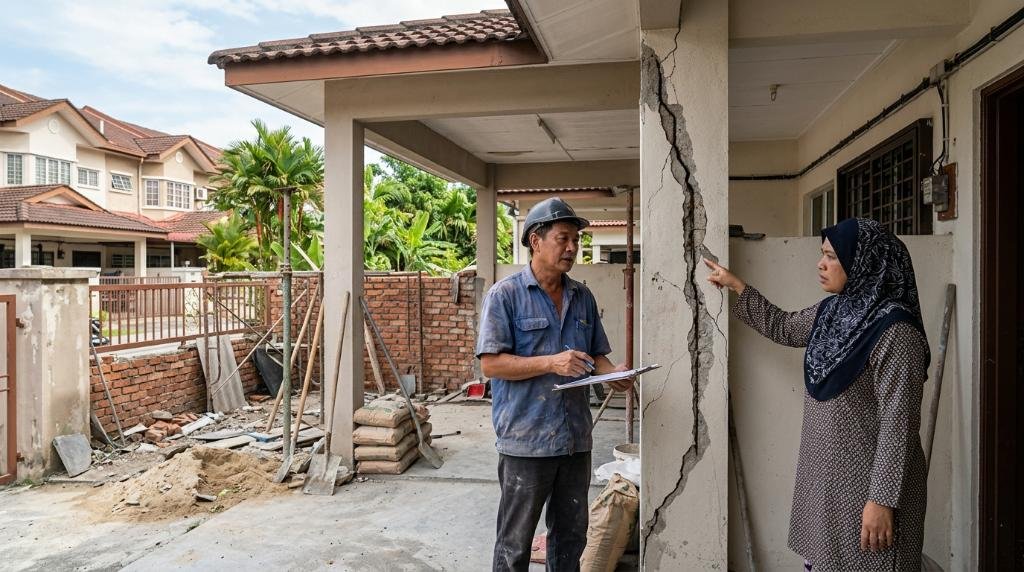
Every year, thousands of Malaysian homeowners find themselves trapped in renovation nightmares. We often read about financial scams—fly-by-night “contractors” on Facebook who collect a 50% upfront deposit and vanish. As recently highlighted by Seputeh MP Teresa Kok, dozens of homeowners have lost their life savings to these unverified social media contractors. However, as an engineering expert at Pro Inspect Solution, I can assure you that the most dangerous renovation scam isn’t the one where the contractor runs away. It’s the one where they stay, finish the job, and leave you with a ticking time bomb of structural hidden defects.
These “engineering scams” occur when unscrupulous builders cut corners to maximize their profit margins. They ignore Construction Industry Development Board (CIDB) regulations, violate QLASSIC (Quality Assessment System in Construction) standards, and utilize uncertified foreign labor. In fact, recent enforcement actions by the Works Ministry and CIDB revealed 91 investigation papers opened against contractors for severe offenses, including the misuse of construction materials and employing unaccredited workers. With the Ministry of Housing and Local Government (KPKT) pushing for stricter property regulations in 2026, homeowners must be proactive. Let’s dive into the technical red flags that separate a legitimate renovation from a hazardous scam.
5 Ways to Spot Structural Hidden Defects from Unscrupulous Contractors
1. The 45-Degree Wall Crack: Structural Failure vs. Plaster Shrinkage
In our hot and humid Malaysian climate, minor hairline cracks (shrinkage cracks) in fresh plaster are common and usually benign. However, rogue contractors will often try to convince you that all cracks are “normal settling.” Do not fall for this.
If you observe a deep, 45-degree diagonal crack radiating from the corners of windows, doors, or across a brick wall, you are likely looking at a severe shear failure or foundation settlement. This often happens when a contractor illegally hacks away a load-bearing wall to create an “open concept” living room without installing structural steel beams (I-beams) or obtaining endorsement from a Professional Engineer (PE). Masking these cracks with skim coat and fresh paint is a classic case of contractor issues and poor workmanship that a professional Building Condition Assessment will immediately expose.

2. Substandard Roof Trusses: The Monsoon Collapse Risk
The transition from timber to lightweight cold-formed steel trusses in Malaysia has introduced a highly lucrative avenue for scammers. To slash costs, fraudulent contractors substitute CIDB-approved, high-tensile steel with uncertified, thin C-channel sections (often referred to locally as “besi nipis”).
Because the roof truss is hidden above the ceiling plasterboard, homeowners remain blissfully unaware of the danger until a severe monsoon thunderstorm triggers a catastrophic roof collapse. To combat this, we utilize high-tech Façade & Roof Inspection (Drone) technology. High-resolution aerial imaging allows us to inspect the truss gauges, connection joints, and roofing alignment without intrusive teardowns, ensuring the materials meet Malaysian Standards (MS).
3. The “Hollow” Tiling Test and Waterproofing Fraud
Inter-floor leakage is currently the number one dispute filed at the Strata Management Tribunal (SMT) in Malaysia. Why? Because fraudulent contractors frequently skip the crucial polyurethane (PU) or cementitious waterproofing layer in bathrooms and balconies to save a few hundred ringgit.
Furthermore, they employ the “spot bonding” method for floor tiles instead of full cement buttering. If you tap your newly laid tiles with a coin or a hollow-sounding rod and hear a distinct, echoing “clack,” the tile is hollow underneath. Over time, these tiles will pop or crack, allowing water to seep directly into the concrete slab. Booking a comprehensive building condition assessment before signing the final handover document guarantees these hollow spots and moisture anomalies are mapped out using thermal imaging and moisture meters.
4. Beam and Slab Deflection: The Sagging Truth
Time is money. In a rush to move on to their next victim, unscrupulous contractors will prematurely remove the timber or steel formwork supporting a freshly poured concrete slab or beam. Concrete requires 28 days to achieve its full characteristic strength. Removing the props at day 7 or 10 causes the structural element to permanently sag—a defect known as deflection.
While the contractor might try to hide a sagging ceiling with a perfectly leveled plasterboard drop-ceiling, the structural integrity of your upper floor is permanently compromised. Rely on the engineering experts at Pro Inspect Solution to measure floor levels and beam straightness using laser leveling technology.
5. Substandard Material Substitution: The Scam You Don’t See
Another major scam involves material substitution. You might have paid for Grade 30 concrete, but the contractor secretly ordered Grade 20. You paid for SIRIM-certified electrical wiring, but they installed cheap, fire-hazard cables imported through unverified channels.
During our inspections, we strictly cross-reference the physical materials on-site against the approved Bill of Quantities (BQ) and CIDB Act 520 requirements. CIDB operations across Malaysia regularly penalize contractors for utilizing non-compliant materials that fail safety margins. Don’t let your home become a statistic.

Why a Building Condition Assessment is Your Best Defense
You wouldn’t buy a used car without sending it to a trusted mechanic. Similarly, you should never make the final payment to a renovation contractor without a rigorous Building Condition Assessment. Our methodology is rooted in strict QLASSIC protocols.
By engaging an independent inspector, you shift the power dynamic. Contractors are far less likely to attempt a scam when they know a qualified Professional Engineer (Ir.) will be scrutinizing their work. From deep structural analysis to identifying poor workmanship, our Pro Inspect Solution team provides a legally defensible defect report that you can use to demand rectification or support your case in a legal tribunal.
Steps to Protect Yourself Before Hiring a Contractor
- Verify CIDB Registration: It is illegal to carry out construction work in Malaysia without a valid CIDB license. Always verify their registration status on the official CIDB portal.
- Use a Standard Form of Contract: Never rely on a one-page “Quotation.” Demand a proper contract (such as the PAM Contract or CIDB’s standard form) that clearly outlines the scope, materials, timelines, and defect liability period (DLP).
- Never Overpay Upfront: A standard mobilization deposit should range between 10% to 15%. If a contractor demands 40% or 50% upfront, walk away immediately.
- Schedule Stage Inspections: Integrate our drone roof inspection and structural checks into the payment milestones. Only release the next tranche of funds after an independent engineer verifies the work.
Frequently Asked Questions (FAQ)
What are the most common renovation scams in Malaysia?
The most common renovation scams in Malaysia involve contractors absconding with heavy upfront deposits, substituting standard building materials with uncertified cheap alternatives, and hiding structural defects behind cosmetic finishes, leading to severe long-term damage.
How does a Building Condition Assessment help against bad contractors?
A Building Condition Assessment conducted by an independent engineering professional identifies poor workmanship, structural non-compliance, and hidden defects using CIDB QLASSIC standards before you hand over your final payments to the contractor.
Can I report a renovation contractor with poor workmanship in Malaysia?
Yes. Homeowners can lodge a report with the Tribunal for Consumer Claims Malaysia (TTPM) or escalate severe cases involving structural failures, uncertified workers, and Act 520 violations directly to the Construction Industry Development Board (CIDB).
Don’t Let Renovation Scams Cost You Your Life Savings
Ensure your family’s safety and protect your investment with a certified, independent inspection. Let the engineering experts uncover what your contractor is trying to hide.
