
By Ir Vimal, Professional Engineer | July 7, 2026
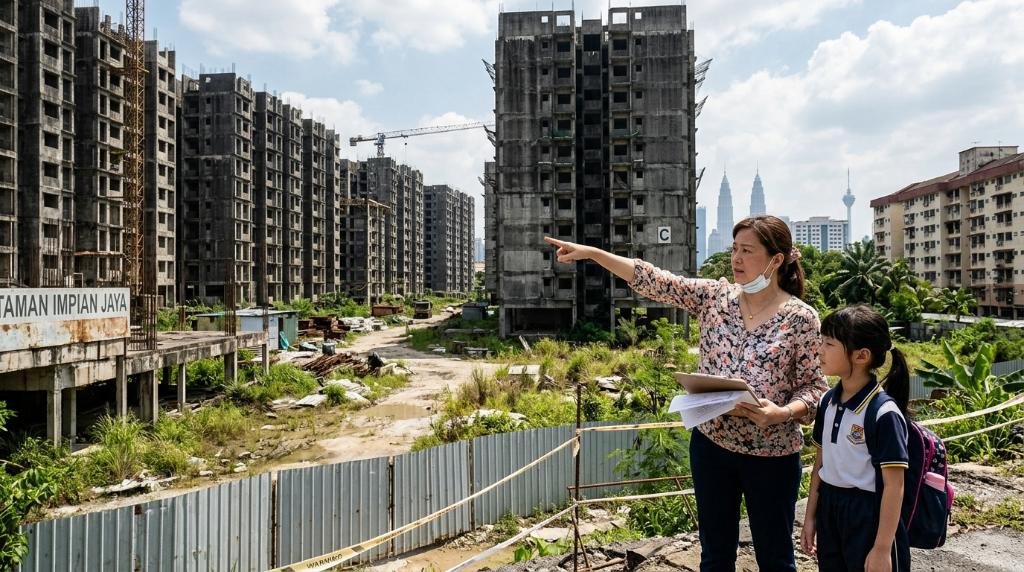
The Malaysian property landscape is grappling with a persistent and evolving crisis. Despite stringent regulatory frameworks, sick housing projects in Malaysia continue to plague homebuyers, dragging them into a draining real estate limbo. For a project to be officially classified as “sick” by the Ministry of Housing and Local Government (KPKT), physical construction must have suffered a delay of more than 30% against its scheduled progress, or its Sales and Purchase Agreement (SPA) must have expired without completion.
But the true cost of these stalled developments goes far beyond delayed move-in dates and financial distress. From an engineering and structural perspective, a project left exposed to the brutal Malaysian tropical climate is a ticking time bomb. This guide bypasses the generic legal advice to provide an insider, engineering-first perspective on what happens when construction stops, the severe structural risks involved, and how buyers and developers must navigate this complex reality.
The Engineering Reality Behind Sick Projects
When a housing project stalls, the narrative usually centers on the developer’s cash flow. However, the engineering reality is far more alarming. Unfinished buildings are not designed to sit exposed to the elements. During the construction phase, concrete structures and exposed rebars are highly vulnerable.
Malaysia’s high humidity and intense rainfall accelerate structural degradation. When construction abruptly halts, waterproofing layers are often incomplete. This allows rainwater to pool on exposed concrete slabs, leading to severe seepage. Over months or years, this stagnant water begins to compromise the structural integrity of the building, setting a dangerous precedent for future occupancy.

Unseen Housing Defect Risks in Abandoned Structures
One of the most critical, yet rarely discussed, threats of reviving a sick project involves latent housing defect risks. As an engineer evaluating these sites, the primary concern is concrete carbonation and rebar corrosion. According to the structural design codes under BS EN 1992-1-1 (Eurocode 2) adopted in Malaysia, concrete cover is designed to protect steel reinforcement from carbon dioxide and moisture.
Concrete Carbonation and Rebar Corrosion
When a structure is left exposed without its final architectural finishes or protective coatings, atmospheric CO2 penetrates the concrete, lowering its alkalinity. This process, known as carbonation, strips the passivation layer from the steel reinforcement. Once moisture reaches the steel, corrosion begins. Rust expands to occupy up to six times the volume of the original steel, causing the concrete to spall and crack.
If a “white knight” developer takes over a sick project and simply plasters over these aging, exposed structures without conducting core testing or structural non-destructive testing (NDT), the end-buyers will inherit massive, hidden defects. Structural cracks, severe water seepage, and spalling concrete will inevitably manifest within the first few years of occupancy.
Case Focus: Abandoned Property Johor Bahru
The southern corridor offers a stark localized example of this crisis. The surge of mega-developments in the mid-2010s, coupled with subsequent economic cooling, resulted in numerous cases of abandoned property Johor Bahru. High-density residential blocks meant to cater to cross-border commuters became stranded assets.
In Johor Bahru, coastal developments face an additional threat: airborne chlorides from the sea. Marine environments aggressively attack exposed reinforced concrete. Any stalled project within a few kilometers of the Straits of Johor requires rigorous chloride ingress testing before construction can safely resume. Buyers looking at newly revived projects in these zones must demand transparency regarding the structural integrity assessments conducted prior to the restart of works.

Enforcing Developer Accountability and CIDB Standards
The Malaysian construction industry is heavily regulated by the Construction Industry Development Board (CIDB) and various Malaysian Standards (MS). Yet, developer accountability often falters during the transition from a stalled project to a revived one.
The Role of QLASSIC in Revived Projects
CIDB’s Quality Assessment System in Construction (QLASSIC) is instrumental in measuring workmanship quality. However, QLASSIC evaluates architectural finishes and basic M&E functionality; it does not X-ray the building for structural decay caused during the abandonment period. Therefore, while a developer may boast a high QLASSIC score upon completing a revived sick project, buyers must still exercise extreme caution regarding the foundational engineering.
To truly enforce accountability, buyers and joint management bodies (JMB) should request independent engineering audits. Developers must prove compliance with MS 1553 (Code of Practice on Wind Loading for Building Structure) and MS 544 (Code of Practice for Structural Use of Timber) to ensure that the materials left exposed during the limbo period have not lost their load-bearing capacities.
Escaping the Real Estate Limbo: Actionable Steps
Being trapped in real estate limbo is a nightmare for any Malaysian homebuyer. If your property has been classified as a sick housing project, proactive measures are required.
- Verify the Project Status: Regularly check the official National Housing Department (JPN) portal under KPKT for updated lists of sick and abandoned projects.
- Form a Pro-Tem Committee: Individual voices are easily ignored. Form a committee with fellow buyers to legally engage the developer and coordinate with KPKT.
- Demand Structural Audits: If a rescue contractor is appointed, legally request the reports from the independent structural assessment before allowing them to simply resume brick-and-mortar work.
- Know Your HDA Rights: Under the Housing Development (Control and Licensing) Act 1966, you are entitled to Liquidated Ascertained Damages (LAD). Ensure you file claims via the Tribunal for Homebuyer Claims the moment there is a breach in the SPA delivery date.
For more insights on how structural integrity impacts your property investments, you can explore the resources at Pro Inspect Solution.
Frequently Asked Questions (FAQ)
Below are common queries regarding stalled and abandoned properties in Malaysia:
What defines a sick housing project in Malaysia?
A housing project is classified as “sick” by KPKT when physical construction is delayed by more than 30% compared to the scheduled progress, or if the Sales and Purchase Agreement (SPA) has expired without the project being completed.
Can structural integrity be compromised in an abandoned property?
Yes. Prolonged exposure of uncompleted structures to Malaysia’s tropical climate accelerates concrete carbonation and rebar corrosion. This heavily increases housing defect risks if the project is eventually revived without rigorous non-destructive testing (NDT) and structural remediation.
How can buyers demand developer accountability?
Buyers can utilize the Housing Development (Control and Licensing) Act 1966 (HDA) to seek recourse, formally report stalled projects to KPKT, demand independent engineering audits upon revival, and lodge claims through the Tribunal for Homebuyer Claims for late delivery.
Need Expert Engineering Advice?
If you suspect severe structural issues in a recently revived project or need professional guidance navigating housing defect risks, it is critical to consult with licensed engineers before signing off on vacant possession.
Take action today: Chat with us on WhatsApp at +60168064902 for specialized property consultation in Malaysia.
