
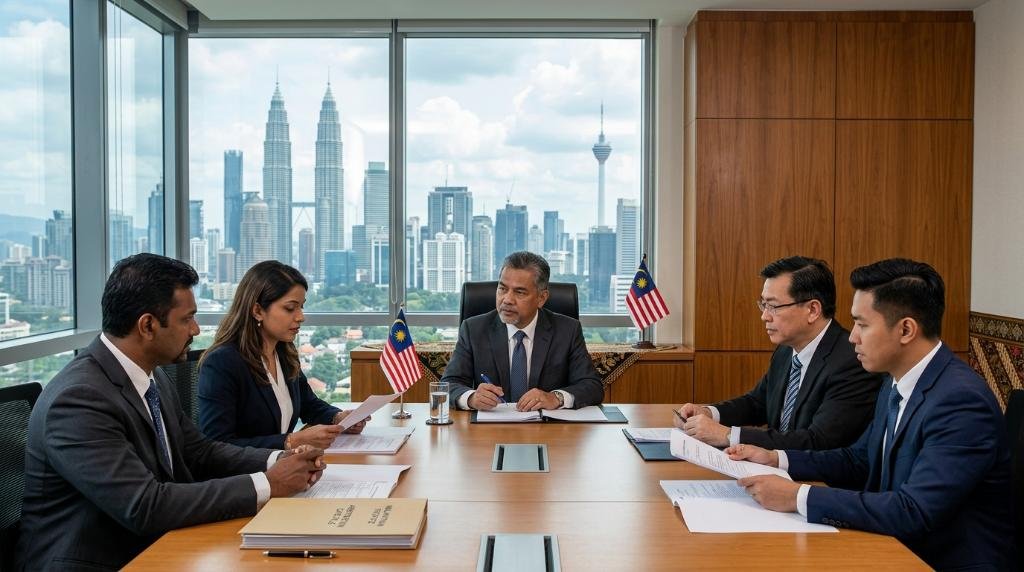
The Malaysian property and construction sectors are undergoing a significant institutional transformation. As multi-million ringgit developments, commercial high-rises, and industrial complexes become increasingly sophisticated, dispute resolution mechanism must evolve alongside modern engineering complexities. A prominent national milestone reflecting this paradigm shift is highlighted in the recent strategic MoU to boost arbitration, mediation services – Borneo Post, which underscores Malaysia’s commitment to bolstering alternative dispute resolution (ADR) framework to settle commercial and real estate conflicts swiftly without clogging civil court dockets.
For commercial real estate developers, Joint Management Bodies (JMB), Management Corporations (MC), and main contractors across Malaysia, relying solely on traditional civil litigation often results in years of legal stagnation, escalating legal fees, and severe project disruption. Seeking professional property arbitration services Malaysia offers a streamlined, confidential, and technically competent pathway to resolve complex property conflicts. However, successful arbitration outcomes depend heavily on objective, verifiable engineering evidence. Without authoritative diagnostic data, even the most compelling legal arguments can crumble before an arbitral tribunal.
Table of Contents
- The ADR Landscape: Why Commercial Real Estate Chooses Arbitration
- Technical Root Causes: Building Defects That Trigger Malaysian Property Disputes
- Construction Dispute Mediation Malaysia vs. Binding Arbitration
- The Strategic Value of Independent Property Inspection in Evidence Preparation
- A 5-Step Strategic Roadmap for Resolving Building Defect Claims
- Frequently Asked Questions (FAQ)
The ADR Landscape: Why Commercial Real Estate Chooses Arbitration
Malaysia’s regulatory and legal ecosystem for property construction is anchored by robust statutory frameworks, including the Construction Industry Payment and Adjudication Act 2012 (CIPAA), the Arbitration Act 2005 (Act 646), and administrative guidelines issued by the Asian International Arbitration Centre (AIAC). As commercial property disputes frequently involve intricate structural engineering, soil mechanics, concrete material science, and building physics, traditional courtroom judges often face a steep learning curve regarding technical nuances.
This is where specialized alternative dispute resolution excels. By appointing arbitrators with background in construction law, quantity surveying, or structural engineering, stakeholders ensure that proceedings are adjudicated by individuals who inherently understand structural load distributions, defective waterproofing, and contractual variations. Engaging specialized Expert Witness & Dispute Resolution engineering teams bridges the gap between complex structural diagnostic findings and arbitral legal briefs.
Arbitration provides four distinct strategic advantages over litigation:
- Technical Competence: Tribunals focus directly on technical facts, statutory non-compliances, and forensic engineering reports.
- Confidentiality: Unlike open court hearings, arbitration protects corporate reputations and commercial property asset values from public exposure.
- Finality & Enforceability: Arbitral awards are final, binding, and enforceable across over 160 jurisdictions worldwide under the New York Convention.
- Speed and Efficiency: Arbitral timetables are customized, preventing commercial developments from languishing in procedural delays.
Technical Root Causes: Building Defects That Trigger Malaysian Property Disputes
In our practice across Peninsular Malaysia, Sabah, and Sarawak, property disputes rarely begin over pure legal interpretation; they originate from unresolved physical engineering failures on site. When structural or architectural defects manifest during or post-handover, financial disagreements escalate rapidly between project owners, main contractors, and sub-contractors.
To establish a credible building defect claim settlement, stakeholders must identify the precise physical failure mechanism under statutory requirements such as the Uniform Building By-Laws (UBBL 1984) and the Strata Management Act 2013 (Act 757).
1. Concrete Carbonation and Reinforced Concrete (RC) Spalling
Malaysia’s tropical climate—characterized by high relative humidity and torrential rainfall—accelerates atmospheric carbonation in concrete elements. When concrete cover over steel rebar is insufficient or non-compliant with MS 1195 standards, carbon dioxide neutralizes the protective alkaline environment around the rebar. The resulting corrosion expands steel bars up to six times their original volume, inducing internal tensile stresses that shatter outer concrete layers. In arbitration, determining whether spalling stems from poor concrete mix design or aggressive environmental exposure requires accredited laboratory core testing and carbonation depth profiling.
2. Deep Honeycombing and Voids in Structural Load-Bearing Members
Poor concrete compaction during pour phases, inadequate vibration, or improper aggregate sizing creates internal honeycombing. These voids severely compromise shear strength and axial load capacity in transfer plates, columns, and shear walls. Resolving contractor liability demands specialized diagnostic tools such as Ultrasonic Pulse Velocity (UPV) and Ground Penetrating Radar (GPR) to map internal void distributions without destructive compromise.
3. Inter-Floor Leakage and Waterproofing Membrane Debonding
Under Section 142 of Act 757, inter-floor leakages in stratified buildings carry statutory presumptions. Waterproofing membrane failures in podium decks, basements, and wet areas account for over 60% of commercial property arbitration claims in Malaysia. Proving whether failure occurred due to improper surface preparation, inadequate curing, thermal movement, or mechanical puncture requires forensic physical audits by certified engineers.

Construction Dispute Mediation Malaysia vs. Binding Arbitration
Understanding when to utilize construction dispute mediation Malaysia versus formal property arbitration is critical for property owners and main contractors seeking optimal dispute outcomes.
| Feature | Construction Dispute Mediation | Property Arbitration Services |
|---|---|---|
| Legal Nature | Voluntary, non-binding negotiation process | Formal, legally binding adjudicative proceeding |
| Decision Maker | Neutral Mediator (facilitator only) | Arbitrator / Arbitral Tribunal (issues award) |
| Outcome | Mutual Settlement Agreement (contractual) | Arbitral Award (enforceable as High Court judgment) |
| Role of Engineering Evidence | Guides negotiation and realistic valuation | Forms strict, cross-examinable evidentiary baseline |
Mediation offers a flexible platform to salvage ongoing commercial relationships without incurring heavy legal expenditures. However, when technical opinions diverge drastically regarding defect rectification costs, parties must escalate the conflict to binding arbitration. Conducting a comprehensive Building Condition Assessment provides the baseline technical documentation necessary for mediation attempts and arbitration filings.
The Strategic Value of Independent Property Inspection in Evidence Preparation
In property arbitration, claims fail not because defects are absent, but because the evidence submitted lacks scientific rigor, independent objectivity, or compliance with recognized engineering codes. Submitting generic photos or subjective opinions from non-registered personnel is insufficient before an arbitral tribunal.
To achieve a fair, legally sound building defect claim settlement, parties must engage an accredited independent property inspection Malaysia specialist. Independent engineering audits provide:
- Methodological Diagnostic Testing: Utilizing Non-Destructive Testing (NDT), rebound hammer tests, ultrasonic pulse velocity, core sampling, and chemical chloride ion testing to establish empirical facts.
- Material Science Diagnostics: Conducting specialized assessments through Concrete Technology Consultancy to determine if supplied concrete mixes satisfied specified compressive strengths and durabilities under Malaysian Standard (MS) guidelines.
- Compliance Verification: Cross-referencing installed works with CIDB standard guidelines, Architectural and Building Engineering Standards, and project specifications.
- Quantified Remediation Costing: Preparing uninflated, line-item rectification BOQs (Bill of Quantities) verified by qualified engineers to establish actual financial loss.

A 5-Step Strategic Roadmap for Resolving Building Defect Claims
Navigating property disputes requires structured execution to maximize legal positioning and reach a rapid commercial resolution:
Step 1: Early Technical Audit & Defect Documentation
Commission an immediate forensic building condition assessment as soon as defects manifest. Ensure physical symptoms, thermal imaging scans, and moisture ingress maps are meticulously cataloged by a Professional Engineer (Ir.).
Step 2: Root-Cause Investigation & Material Testing
Perform non-destructive and micro-destructive testing on affected concrete elements, structural connections, and façade systems. Determine precisely whether failures stem from original design deficiencies, poor contractor workmanship, or lack of routine maintenance.
Step 3: Pre-Arbitration Negotiation & Mediation
Submit the certified engineering report to opposing parties during pre-arbitration meetings or formal mediation. Objective, technical engineering data often encourages realistic settlement counter-offers, resolving disputes without proceeding to costly formal arbitration hearings.
Step 4: Formal Filing & Expert Witness Submission
If mediation fails, initiate formal arbitration under AIAC Rules. Engage your independent diagnostic engineer as an Expert Witness to prepare formal expert reports and deliver expert oral testimony under cross-examination before the arbitral tribunal.
Step 5: Arbitral Award Execution & Remedial Works
Upon receiving a binding arbitral award, register the decision with the High Court of Malaysia for execution. Utilize funds recovered from claim settlements to execute certified engineering repair methodologies.
Frequently Asked Questions (FAQ)
Why should property developers and owners choose arbitration over civil court litigation in Malaysia?
Arbitration under the Asian International Arbitration Centre (AIAC) offers confidentiality, technical expertise, and speed. Unlike civil courts where judges may lack specialized technical engineering backgrounds, arbitral tribunals utilize technical experts to resolve complex building defect claims efficiently.
How does an independent property inspection impact a building defect claim settlement?
An independent property inspection provides empirical, forensic engineering evidence regarding structural defects, water ingress root causes, and material non-compliance. This unbiased report forms the legal bedrock for calculating fair financial rectification costs during dispute resolution.
What is the key difference between construction dispute mediation Malaysia and binding arbitration?
Mediation is a voluntary, non-binding negotiation process aimed at reaching an amicable compromise. In contrast, arbitration is a formal, legally binding proceeding where an arbitrator issues an award enforceable in the High Court of Malaysia under the Arbitration Act 2005.
What specific role does an expert witness engineer serve in property arbitration?
An expert witness engineer performs non-destructive testing (NDT), structural audits, and root-cause analysis. They prepare independent expert reports and deliver expert oral testimony before arbitral tribunals to clarify complex engineering failures.
When is the best time to engage professional property arbitration services in Malaysia?
Engage arbitration and expert inspection services immediately when a technical impasse occurs—such as during Defect Liability Period (DLP) negotiations, major structural slab failures, or contractor variation disputes—to preserve physical forensic evidence.
Need Professional Property Inspection or Building Audit Services?
Get instant consultation and professional engineering advice from Pro Inspect Solution.
