
Published: July 30, 2026 | Category: Real Estate Policy & Structural Engineering
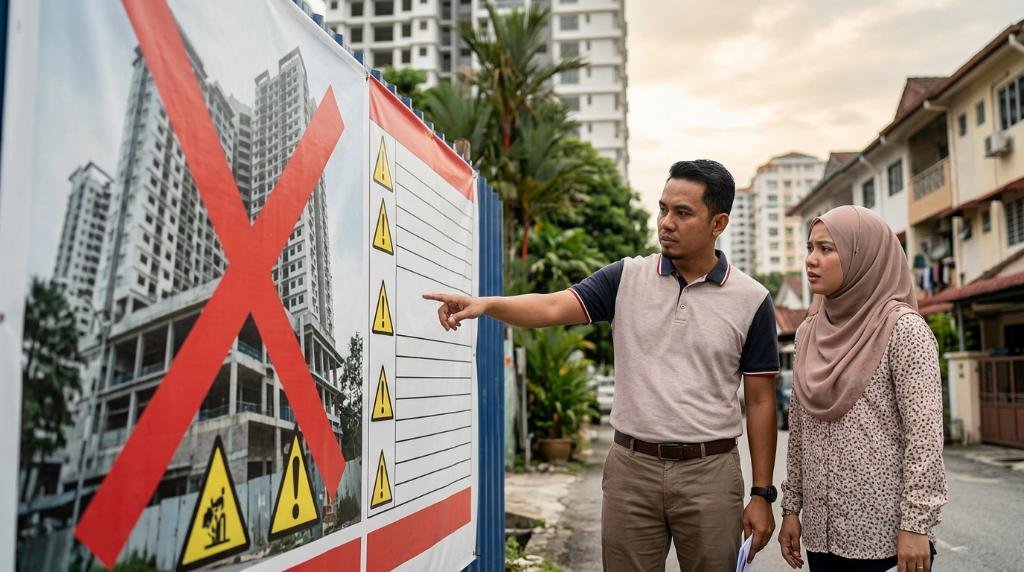
Navigating the Malaysian property landscape requires far more than evaluating location maps, floor plans, and attractive rebate packages. For decades, the spectre of abandoned housing projects in malaysia has burdened purchasers with financial strain—leaving families paying monthly bank installments for half-built, deteriorating concrete skeletons while servicing rents elsewhere. To mitigate these systemic risks, the Ministry of Housing and Local Government (Kementerian Perumahan dan Kerajaan Tempatan or KPKT) actively monitors, fines, and blacklists errant developers.
Understanding how to identify kpkt blacklisted developers malaysia, interpreting the structural root causes of project stalling, and navigating the evolving regulatory framework under the madani housing reforms is essential for homebuyers, contractors, and real estate professionals. This deep-dive engineering and legal analysis breaks down how developer enforcement operates, why site-level technical failures trigger financial collapse, and how legislative changes—including the upcoming real property development bill—aim to transform homebuyer protection malaysia wide.
Table of Contents
- 1. The State of Malaysian Property Enforcement & Enforcement Metrics
- 2. Legal Framework: Why Developers End Up on the KPKT Blacklist
- 3. The Engineering Perspective: How Site Failures Drive Project “Sickness”
- 4. Madani Housing Reforms & The Real Property Development Bill
- 5. Housing Development Account (HDA) Governance & Digital Oversight (HIMS)
- 6. Practical Due Diligence Guide for Malaysian Property Buyers & Investors
- 7. Frequently Asked Questions (FAQ)
1. The State of Malaysian Property Enforcement & Enforcement Metrics
In recent years, KPKT has escalated direct enforcement against non-compliant housing developers. Grounded in data from the National Housing Department (JPN), enforcement has transitioned from passive record-keeping to proactive inter-agency blacklisting. Over 100 property developers and their board of directors have been systematically blacklisted in recent enforcement exercises due to regulatory non-compliance, uncollected compounds, and structural abandonment.
According to Parliamentary disclosures from KPKT’s Special Task Force on Sick and Abandoned Private Housing Projects (TFST), Peninsular Malaysia registered over 300 private housing developments classified as “sick”. These projects represent tens of thousands of residential units and tens of billions of Ringgit in Gross Development Value (GDV). While multi-agency interventions have successfully revived over 1,600 stalled developments, the structural mechanisms that cause developers to fail remain a critical topic for structural auditors and legal experts.
To verify official listings of non-compliant entities, purchasers can perform real-time status checks through the official TEDUH KPKT Portal. Further reporting on national housing recovery statistics can be tracked through trusted national media sources such as The Star and Malay Mail.
2. Legal Framework: Why Developers End Up on the KPKT Blacklist
Under the Housing Development (Control and Licensing) Act 1966 (Act 118), housing development in Peninsular Malaysia is strictly governed. When a developer breaches administrative, financial, or statutory conditions, KPKT places both the operating company and individual directors on regulatory blacklists. This effectively freezes their access to new licenses and Advertising Permit and Developer’s Licenses (APDL).
KPKT categorizes developer blacklists into six primary enforcement criteria:
- Unlicensed Developers: Entities carrying out residential sales activities without obtaining an active license from JPN.
- Developers Without Valid APDL: Entities marketing or selling units prior to securing formal sales and advertising permits.
- Developers Failing to Comply with Award Tribunals: Entities failing to pay financial awards ordered by the Tribunal for Homebuyer Claims (TTPR).
- Developers Incurring Failure to Pay Compounds: Entities accumulating unpaid compounds issued for administrative, operational, or reporting breaches under Act 118.
- Developers with Stalled/Sick Projects: Projects experiencing continuous progress delays exceeding 30% compared to schedule or where construction has halted entirely on-site.
- Developers Operating Abandoned Projects: Formal declaration under Section 11(1)(ca) of Act 118, where the Minister certifies the project as abandoned due to financial insolvency or developer desertion.
Crucially, blacklisting extends beyond the corporate shell entity. Board members and legal directors are personally indexed. This prevents errant directors from closing a distressed Special Purpose Vehicle (SPV) and setting up a new entity to launch subsequent developments.
3. The Engineering Perspective: How Site Failures Drive Project “Sickness”
From a structural engineering standpoint, project abandonment rarely happens in a financial vacuum. In our practice inspecting commercial and residential structures across Malaysia, physical engineering failures on-site almost always precede corporate insolvency. Understanding these engineering failure modes offers a clear insider perspective into how a project transforms from a viable development into a sick or blacklisted project.
Sub-Standard Concrete Works and Non-Compliance with MS Standards
During the structural frame construction phase, developers under cash flow strain often squeeze main contractors, who in turn hire uncertified sub-contractors. This frequently results in significant structural defects under Malaysian Standard MS 1184 (Code of Practice for Structural Use of Concrete) and MS 2680:
- Severe Concrete Honeycombing & Shear Failure: Poor compaction, improper concrete mix ratios, and inadequate vibration lead to extensive honeycombing across load-bearing reinforced concrete (RC) columns and transfer slabs. When independent structural audits reveal compromised characteristic strength (fck), local authorities (PBT) issue immediate Stop Work Orders (Borang B/Borang E halts).
- Inadequate Rebar Cover and Concrete Spalling: Failure to install specified spacer blocks results in misplaced reinforcement bars. Exposed rebar rapidly corrodes under Malaysia’s high tropical humidity, triggering early structural delamination and concrete spalling.
- Improper Retaining Wall & Foundation Engineering: In sloping terrain across Klang Valley, Penang, and Johor, cost-cutting on earthworks and soil retention systems (under MS 1756 / BS 8002 guidelines) leads to excessive lateral movement, soil settlement, and foundation cracking. Remediation costs often exceed the remaining project budget.
The Defect Escalation Loop
When structural defects occur, local councils or CIDB (Construction Industry Development Board) step in to enforce technical compliance. Rectification requires extensive structural non-destructive testing (NDT), core drilling, load testing, and retrofitting (such as carbon fiber reinforced polymer wrapping or structural steel jacketing). These unplanned engineering expenses deplete the project reserve. As contractors cease work due to non-payment, construction progress stalls—triggering the financial snowball that leads directly to KPKT blacklisting.

4. Madani Housing Reforms & The Real Property Development Bill
To structurally reform the real estate sector and eliminate systemic project failure, the government initiated comprehensive madani housing reforms. Central to this overhaul is the replacement of the decades-old Housing Development (Control and Licensing) Act 1966 with the landmark real property development bill.
This legislative shift introduces pivotal updates aimed at modernizing industry oversight and strengthening homebuyer protection malaysia wide:
| Regulatory Aspect | Legacy Framework (Act 118) | Real Property Development Bill Framework |
|---|---|---|
| Scope of Protection | Primarily restricted to residential-titled properties. | Expands coverage to include commercial-titled developments (SOFO, SOVO, serviced suites). |
| Agreement Execution | Manual paper-based Sale and Purchase Agreements (SPA). | Mandatory Electronic Sale & Purchase Agreement (eSPA) with biometric eKYC. |
| Early Demand Verification | Immediate binding SPA execution upon booking fee payment. | Proposed Option to Purchase (OTP) mechanism allowing exit prior to full SPA execution. |
| Audit & Enforcement Powers | Reactive audits post-complaint or post-delay. | Enhanced proactive technical and financial audit powers with heightened criminal penalties. |
By expanding statutory oversight to commercial-titled residential products (such as SOHO, SOVO, and serviced apartments sitting on commercial land), lawmakers are closing a long-standing legal loophole where purchasers lacked standard statutory protection under Schedule G or H agreements. Further industry insights on property engineering standards can be found on the Pro Inspect Solution homepage.
5. Housing Development Account (HDA) Governance & Digital Oversight (HIMS)
Historically, one of the leading catalysts for project abandonment was the improper drawdown of progress claims from the Housing Development Account (HDA). Under statutory rules, buyer progressive payments and bank loan disbursements must flow directly into designated HDA accounts, strictly regulated to fund site construction, professional consultancy fees, and quit rent/assessment.
In distressed developments, premature financial claims are sometimes made against unverified physical completion. When progressive billing certificates (Architect’s Certificate of Stage Completion) are issued without strict structural audit verification, funds are released faster than physical work is completed on site. Once the HDA account is drained prematurely, the developer lacks capital to complete subsequent structural phases—such as internal services, M&E infrastructure, and architectural finishes—leaving the project stranded.

To permanently solve this vulnerability, KPKT introduced the **Housing Integrated Management System (HIMS)** alongside upgrades to the **TEDUH** analytics framework. HIMS acts as a centralized digital platform that tracks:
- Real-time financial flows within developer HDA accounts.
- Direct cross-verification between certified architectural progress and bank disbursements.
- Automated red-flagging when site progress deviates significantly from projected timelines.
- Integration with digital eSPA systems to track every unit transaction transparently.
6. Practical Due Diligence Guide for Malaysian Property Buyers & Investors
Whether purchasing a off-plan residential unit or conducting due diligence on potential commercial joint ventures, stakeholders must follow a systematic verification protocol before committing financial reserves:
- Verify Developer License and APDL via TEDUH: Access teduh.kpkt.gov.my and search the operating developer’s registered name and parent entity. Confirm the APDL license number, validity dates, and approved sales pricing.
- Cross-Check Board Members and Parent Entities: Examine the SSM (Suruhanjaya Syarikat Malaysia) company search. Ensure that directors listed on the SPV do not appear on KPKT’s director blacklist for past abandoned developments elsewhere in Malaysia.
- Perform Independent Site Audits: For ongoing developments, visit the physical construction site. Verify that active civil and structural works align with reported architectural progress. Look out for warning signs such as prolonged structural inactivity, lack of safety hoarding updates, or minimal workforce deployment.
- Verify HDA Deposit Account Details: Ensure that all booking fees, earnest deposits, and progressive payments are payable strictly to the official “Housing Development Account” named in the statutory agreement—never to third-party agency accounts or personal accounts.
- Engage Certified Building Inspectors for Vacant Possession: Upon project completion and issuance of the Certificate of Completion and Compliance (CCC), conduct an independent, professional engineering audit. Identifying structural non-compliance during the Defect Liability Period (DLP) ensures the developer remains legally accountable for structural rectifications. You can review independent inspection methodologies at Pro Inspect Solution.
7. Frequently Asked Questions (FAQ)
Q1: How can I check if a property developer is blacklisted by KPKT in Malaysia?
Homebuyers and investors can check a developer’s licensing and blacklisting status through the official KPKT TEDUH portal at teduh.kpkt.gov.my. The portal maintains updated databases of unlicensed developers, entities operating without APDL, developers with uncollected compounds, and developers involved in sick or abandoned developments.
Q2: What triggers a developer to be blacklisted on the KPKT registry?
Developers are blacklisted for offences including failure to submit audited financial statements, non-compliance with APDL permit conditions, unauthorized HDA account withdrawals, abandoning housing projects, failing to settle compounds issued by JPN, or failing to honor awards granted by the Tribunal for Homebuyer Claims (TTPR).
Q3: How do the 2026 Madani Housing Reforms protect homebuyers?
The reforms introduce the Real Property Development Bill (replacing Act 118), mandatory Housing Integrated Management System (HIMS) digital financial tracking, electronic Sale and Purchase Agreements (eSPA), and expanded statutory protection covering commercial-titled residential properties such as serviced apartments and SOHOs.
Q4: Can a blacklisted developer launch new residential or commercial projects in Malaysia?
No. Once blacklisted by KPKT, both the development company and its board of directors are legally barred from applying for new housing development licenses or advertising permits (APDL) until all outstanding fines are settled, compliance requirements are met, and audits are cleared.
Q5: What structural defects lead to a project being classified as a ‘sick’ or abandoned development?
Severe structural defects—such as widespread concrete honeycombing, non-compliant reinforcement steel placement, foundation settlement exceeding MS limits, and structural water ingress—frequently lead local authorities to issue Stop Work Orders. The high cost of technical remediation often drains project reserves, causing financial insolvency and ultimate project abandonment.
Need Certified Property Inspection or Building Audit Services?
Get instant consultation and professional engineering advice from Pro Inspect Solution.
