
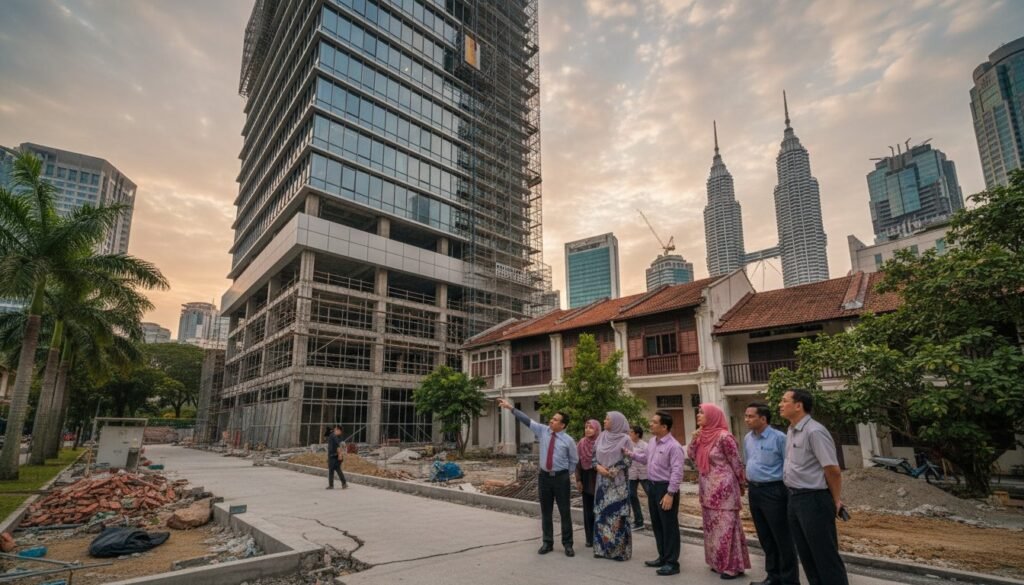
Kuala Lumpur’s skyline is undergoing a profound transformation. As hybrid work models solidify their permanence in 2026, the local real estate sector is witnessing a massive pivot. Older, underutilized commercial spaces are being reimagined into boutique accommodations and luxury hospitality venues. However, while office hotel conversions present a lucrative opportunity, critical missteps in planning and execution are costing developers millions in compliance fines and structural rework.
Table of Contents
- 1. The Catalyst: Surging Office Vacancy in Malaysia
- 2. Unpacking the Hotel Conversion Process
- 3. The Fatal Flaw: Compromising Property Structural Integrity
- 4. Navigating Commercial Building Compliance in Malaysia
- 5. Proactive Engineering Solutions for Seamless Conversions
- 6. Frequently Asked Questions (FAQ)
1. The Catalyst: Surging Office Vacancy in Malaysia
The past few years have radically altered the traditional workspace. With the persistent rise of office vacancy in Malaysia—particularly within older Grade B and Grade C buildings in the Klang Valley—property owners are actively seeking alternative revenue streams. Coupled with the robust tourism influx spurred by Visit Malaysia Year 2026 campaigns, transforming stagnant office blocks into thriving hotels has become the ultimate strategic maneuver.
According to recent market reports highlighted by publications like The Star Business, adaptive reuse is no longer just a trend; it is an economic necessity. Yet, transitioning a building originally designed for 9-to-5 corporate use into a 24/7 hospitality hub is far more complex than simply erecting partition walls and updating the interior decor.
2. Unpacking the Hotel Conversion Process
The hotel conversion process is a multi-phased engineering and architectural endeavor. Converting a high-rise office in Kuala Lumpur involves rigorous planning to adapt open-plan floor plates into highly compartmentalized private rooms, each requiring individual plumbing, HVAC, and electrical systems.

Key Phases of Adaptive Reuse:
- Feasibility and Assessment: Conducting a thorough Building Condition Assessment to determine if the existing skeleton can handle the new operational demands.
- Design & Architecture: Drafting precise blueprints. Often, older buildings lack accurate blueprints, making As-Built Survey & Drawing Services indispensable.
- MEP Overhaul: Upgrading Mechanical, Electrical, and Plumbing (MEP) layouts to accommodate en-suite bathrooms, which requires extensive slab coring.
- Regulatory Approvals: Securing green lights from local authorities like Dewan Bandaraya Kuala Lumpur (DBKL) and Jabatan Bomba dan Penyelamat Malaysia (BOMBA).
3. The Fatal Flaw: Compromising Property Structural Integrity
Where do most office hotel conversions go wrong? The answer invariably points to a failure in addressing property structural integrity.
Office buildings are primarily designed for uniform live loads (desks, filing cabinets, and personnel). Hotels, conversely, introduce concentrated dead loads. The addition of heavy masonry for acoustic partitioning, rooftop water tanks, swimming pools, and mechanical plants drastically alters the load distribution on the building’s foundation and structural framework.
Furthermore, retrofitting plumbing for hundreds of new bathrooms requires coring through post-tensioned concrete slabs. If a contractor inadvertently cuts through a structural tendon or rebar, the structural integrity of the entire floor could be compromised. In such critical scenarios, engaging specialized Structural Repair Consultancy becomes paramount to design safe load-transfer mechanisms and reinforcement strategies (like carbon fiber wrapping or steel jacketing) before catastrophic failures occur.
4. Navigating Commercial Building Compliance in Malaysia
In Malaysia, commercial building compliance is strictly governed by the Uniform Building By-Laws (UBBL) 1984, the Street, Drainage and Building Act 1974, and local council regulations. Ignoring these legal frameworks during conversion will not only halt your project but can lead to severe penalties or the denial of the Certificate of Completion and Compliance (CCC).
Critical Compliance Checkpoints:
- Fire Safety (BOMBA): Hotels require distinct fire compartmentation, advanced sprinkler systems, and specific evacuation route widths that differ significantly from open office layouts.
- Section 85A of the Street, Drainage and Building Act: Older buildings undergoing massive renovations must comply with periodic structural inspections. Our Pemeriksaan Bangunan Berkala (Periodic Inspection) ensures your refurbished structure meets current safety mandates.
- Dispute Avoidance: When compliance falls short, litigation between developers, contractors, and local authorities often ensues. Having robust engineering data backed by Expert Witness & Dispute Resolution services can save a project from endless legal limbo.
5. Proactive Engineering Solutions for Seamless Conversions
Successful office hotel conversions are built on proactive, data-driven engineering. At Pro Inspect Solution, we advocate for a comprehensive “inspect-first” methodology for all adaptive reuse projects in Malaysia.

Essential Safeguards for Your Project:
- Facade & Roof Appraisals: The exterior envelope of a decades-old office building rarely meets the aesthetic or weatherproofing standards of a modern hotel. Utilizing advanced Façade & Roof Inspection (Drone) technology allows for rapid, high-resolution defect mapping without the need for expensive scaffolding.
- Neighboring Property Protection: In dense areas like the KL Golden Triangle, your heavy renovation work can cause vibrations that damage adjacent properties. Conducting a thorough Dilapidation Survey before breaking ground shields developers from unwarranted third-party damage claims.
Don’t let flawed preliminary steps ruin the profitability of your conversion project. Transforming a vacant office into a premier hotel requires precise engineering insights, uncompromising structural assessments, and strict adherence to Malaysian building codes.
6. Frequently Asked Questions (FAQ)
What is the typical hotel conversion process for an office building in Malaysia?
The process begins with a feasibility study and building condition assessment, followed by architectural redesign, securing local council (e.g., DBKL) approvals, upgrading structural integrity and MEP systems, and finally obtaining the Certificate of Completion and Compliance (CCC).
How does office vacancy in Malaysia drive hotel conversions?
With rising office vacancy rates in Malaysia due to oversupply and hybrid working models, property owners are repurposing older commercial buildings into highly profitable hospitality assets to capitalize on growing tourism.
Why is property structural integrity important during conversion?
Hotels require different load distributions due to numerous partition walls, heavy mechanical equipment, and extensive plumbing for en-suite bathrooms. Without assessing property structural integrity, the building may face catastrophic failures or severe non-compliance penalties.
What are the commercial building compliance requirements in KL?
Developers must comply with the Uniform Building By-Laws (UBBL), obtain BOMBA fire safety certifications tailored for hospitality, and undergo periodic building inspections (Section 85A) to ensure structural safety before a CCC is issued.
Ready to Secure Your Hotel Conversion Project?
Ensure your adaptive reuse project is structurally sound, legally compliant, and financially viable. Partner with Malaysia’s leading independent building inspection experts.
