
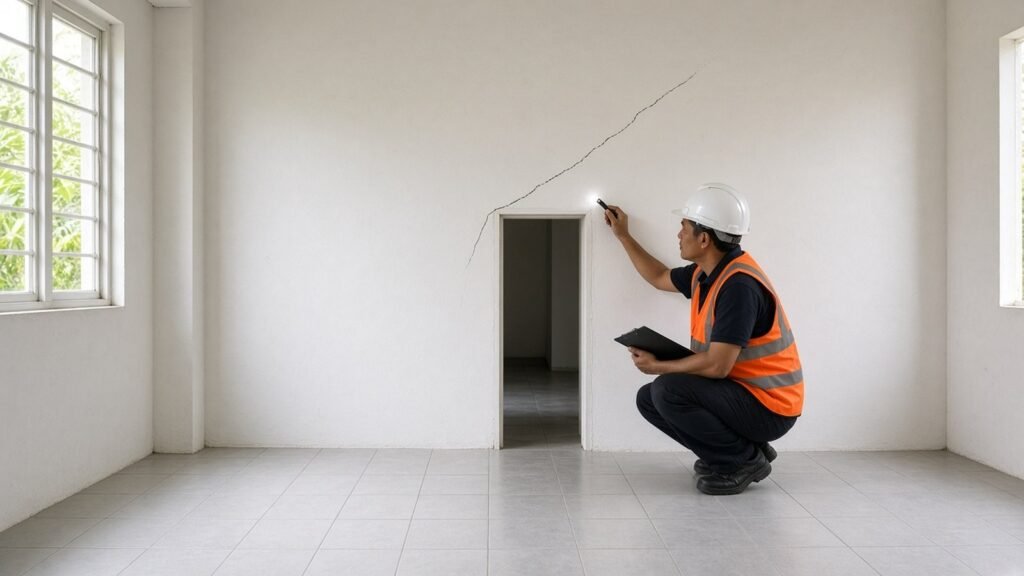
Buying property is one of the largest payments most people make. A viewing usually lasts a few minutes, often with fresh paint and furniture in place. A pre-purchase inspection gives you time and a trained eye to look properly before the deal is fixed.
A pre-purchase building inspection is an independent check of a house, condo or commercial unit before you commit to buy. An engineer looks at the structure, cracks, dampness and leaks, roof, finishes and visible building services, then reports with photos so you can negotiate or budget for repairs.
01What is a pre-purchase building inspection?
It is a visual, non-destructive inspection of a property you are about to buy. The aim is simple: record the condition of the building as it stands, point out defects that need repair, and flag anything that needs a closer look by a specialist.
It is different from a valuation. A valuer tells the bank what the property is worth. An inspection tells you what condition it is in and what may need fixing. The two answer different questions, and many buyers benefit from both.
02Who should get one?
- Buyers of subsale (secondary market) homes, where the developer’s Defect Liability Period (24 months from vacant possession for HDA sales) has usually ended. A recent subsale may still be inside it, so check the vacant possession date.
- Buyers of older landed homes, where roof, drainage, settlement and past renovation work matter.
- Condo buyers, especially where there are signs of leaks from the unit above, facade cracks or ponding on balconies.
- Investors buying commercial units or shophouses, who need to plan repair budgets before rental income starts.
- Buyers of new homes, who should book a property defect inspection at vacant possession, within the Defect Liability Period.
03What a pre-purchase inspection covers
The exact scope depends on the property type and access on the day, but a typical inspection looks at the following.
Structure
- Cracks in walls, beams, columns and slabs, and whether the pattern suggests surface shrinkage or structural movement.
- Signs of settlement, such as stair-step cracks, sloping floors, doors and windows that stick, and gaps at skirting lines.
- Concrete condition, including spalling, honeycombing and exposed reinforcement.
Water: leaks and dampness
- Damp patches, stains and peeling paint on walls and ceilings.
- Leaks around windows, wet areas, roof and balconies.
- Water ponding on floors, balconies and flat roofs, and the condition of drains.
Roof and external works
- Roof covering, flashing, gutters and downpipes, where safely accessible.
- External walls and facade, boundary walls, aprons and drains.
Finishes
- Hollow or cracked floor and wall tiles.
- Doors, windows, locks and alignment.
- Ceiling, painting and joinery defects.
Visible building services
- Visible plumbing and sanitary fittings, water pressure and drainage at taps and traps.
- Visible electrical items such as sockets, switches and the distribution board, checked visually only (not opened or tested). Electrical testing needs a registered competent electrician.
Anything that needs a closer test, such as a structural check, a drainage camera survey or a full electrical test, is flagged as a recommendation rather than guessed at.
04Pre-purchase inspection vs other inspections
| Inspection | When | Main purpose |
|---|---|---|
| Pre-purchase inspection | Before you commit to buy | Know the condition and repair needs before paying |
| Property defect inspection (DLP) | New home, after vacant possession | List defects for the developer to rectify within the DLP |
| Building condition assessment | Existing building, any time | Plan maintenance and budgets for a whole building |
| Dilapidation survey | Before nearby construction | Record a baseline in case of later damage claims |
For a whole building, such as a block managed by a JMB or MC, a building condition assessment is the better fit.
05When to book
Book after your offer is accepted and before the SPA is signed. Ask your lawyer whether the offer can be made subject to the inspection. That gives you time to:
- Ask the seller to repair defects before completion.
- Negotiate the price to reflect repair costs.
- Decide not to proceed if the findings are serious.
Ask the agent early for access, keys and permission to switch on water and power. An empty unit is easier to inspect than a furnished one.
06What you receive
You receive a written report with photographs, the location of each defect and a short note on what it means. Defects are grouped so you can see which items are urgent, which can wait, and which need a specialist. You can share the report with your lawyer, banker or contractor.
07Common findings in Malaysian homes
From the kinds of issues covered on this site, buyers most often see:
- Cracks around door and window openings, and at wall-beam joints.
- Dampness and leaks in bathrooms, kitchens and below wet areas of the unit above.
- Hollow tiles and uneven floors.
- Roof leaks and blocked gutters in landed homes.
- Settlement signs in older houses and extensions, often where renovation work was added onto the original structure.
Our guide to understanding building settlement explains which crack patterns point to settlement.
08How to prepare
- Get the address, unit details and any renovation history from the seller or agent.
- Make sure water and electricity are connected.
- Clear access to the roof space, wet areas and the distribution board where possible.
- Be there at the end so the inspector can walk you through the main findings.
Frequently asked questions
Is a pre-purchase inspection the same as a valuation?
No. A valuation estimates market value for the bank. An inspection records the physical condition and repair needs of the property.
Can an inspection find every defect?
No inspection can. A visual inspection records what is visible and accessible on the day, and recommends further testing where signs point to a deeper problem.
Do I need one for a new home?
For a new home, book a defect inspection after vacant possession, so the developer can rectify defects within the Defect Liability Period.
How long does it take?
It depends on the size and type of property. Our property defect inspection page gives typical on-site times for homes.
Who carries out the inspection?
An engineer, who can recommend follow-up such as a structural repair consultancy review if structural signs are found.

Leads building inspection, concrete assessment and defect investigation work at Pro Inspect Solution, turning site findings into clear, practical guidance for owners, JMBs/MCs, developers and contractors. LinkedIn
Buying a property? Book a pre-purchase inspection.
Planning to buy? Read our pre-purchase property assessment guide or contact us for a written quotation.
Talk to our engineers on WhatsApp or call +60 16-806 4902. Email inspectsolution.pro@gmail.com