
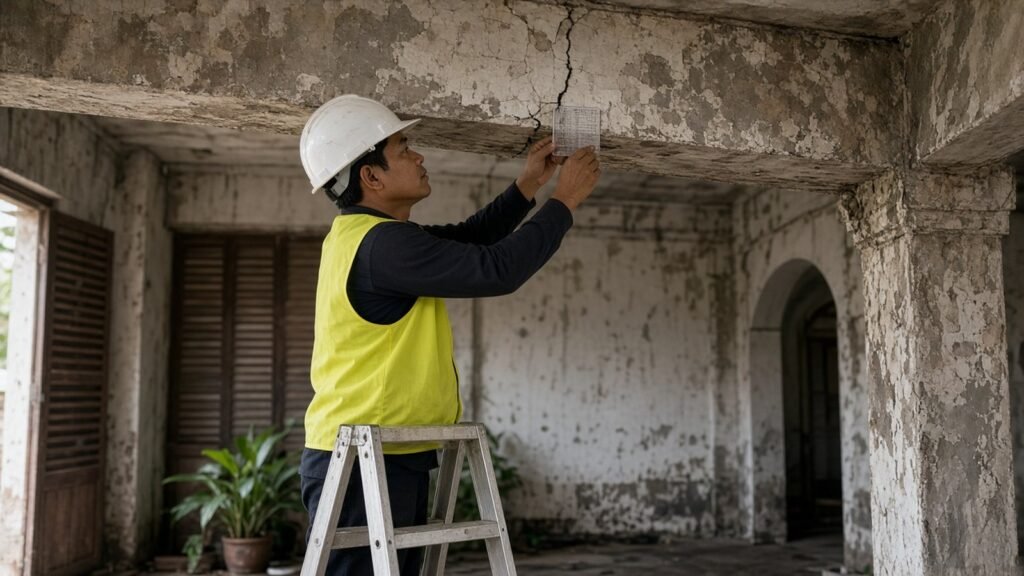
Many owners only think of a structural engineer when something looks wrong. A report is useful earlier too: before renovation, before purchase, or as part of a maintenance plan. This guide explains what the report is, when it is worth getting, and what it should contain.
A structural engineer report is a professional engineer’s written assessment of the condition of a structure, the likely causes of defects and the repairs needed, based on inspection and, where needed, testing. You typically need one when you see serious cracks or settlement, before removing walls or adding floors, after fire or impact damage, or when a council or insurer asks for an engineer’s view.
01What is a structural engineer report?
It is a professional engineer’s written opinion on the condition of a structure and any safety concerns observed. It is based on a site inspection, a review of available drawings and records, and, where needed, tests on materials. It sets out what was found, what is likely causing it, and what should be done.
A structural report is narrower than a building condition assessment, which looks at the whole building, including finishes and services. It is also different from a defect list for the developer, which focuses on workmanship.
02When you need a structural engineer report
1. Cracks that look structural
Not every crack is serious. Fine shrinkage cracks in plaster are common. Cracks are more concerning when they are wide or growing, diagonal or stair-stepped, run through beams, columns or slabs, or come back after repair. An engineer can tell you which type you have. Our guide to understanding and addressing structural cracks explains the common patterns.
2. Signs of settlement
Sloping floors, doors and windows that jam, gaps under skirting and cracks that widen towards one corner can all point to settlement. A report identifies whether movement is uniform or differential and whether monitoring or remedial work is needed. See foundation settlement analysis for background.
3. Renovation that changes the structure
Removing or cutting walls, adding a floor, enlarging openings or adding heavy loads such as water tanks or roof gardens can affect the structure. An engineer checks what the existing structure can carry and what strengthening is needed. Local councils generally require structural plans and calculations endorsed by a Professional Engineer with Practising Certificate (PEPC).
4. Before buying an older property
For an older house or shophouse, or a unit with visible movement, a structural check before purchase helps you understand repair needs and costs before you commit.
5. After damage
Fire, flooding, vehicle impact, landslips or nearby construction can all damage a structure. A report records the damage, identifies immediate safety concerns and sets out repair options. Where nearby construction is planned, a dilapidation survey before works start gives a baseline for comparison.
6. Disputes and claims
Where there is a dispute with a contractor, developer or neighbour, an independent engineer’s report sets out the facts and the likely cause. If the matter goes to a tribunal or arbitration, an expert witness engineer may be needed. How much weight a report carries is for the tribunal or court to decide.
7. Periodic inspections and council notices
Older buildings may need periodic inspection, and a council may issue a notice asking for an engineer’s assessment. Our periodic building inspection page covers this.
03What a structural report should contain
| Section | What it covers |
|---|---|
| Scope and limits | What was inspected, what was not accessible, and the type of inspection |
| Background | Building type, age where known, drawings and records reviewed |
| Observations | Defects found, with photographs, locations and measurements where taken |
| Assessment | Likely causes and whether the defect is structural or non-structural |
| Tests (if done) | Results of any material tests, such as concrete tests |
| Recommendations | Repair, monitoring or further investigation, in order of priority |
| Engineer’s details | Name and registration of the engineer responsible |
A clear report separates what was seen from what is inferred, and states its limits honestly.
04What happens during the inspection
- Brief and documents. You explain the problem and share drawings, past reports and photos.
- Site inspection. The engineer inspects the affected areas and the structure around them, and measures cracks or levels where useful.
- Testing if needed. Where the cause is not clear from a visual check, non-destructive tests or sampling may be recommended. Our concrete technology service covers concrete testing.
- Report. The engineer writes up findings and recommendations.
- Follow-up. If repairs are needed, the engineer can specify them and check the work. See structural repair consultancy.
05Structural engineer vs other professionals
| Professional | Best for |
|---|---|
| Structural (professional) engineer | Structural safety, cracks, settlement, alterations, repair design |
| Building surveyor | Condition and defect surveys, mostly non-structural |
| Contractor | Carrying out repairs to a specification |
| Valuer | Market value for sale or financing |
Our article on professional engineer vs building surveyor explores the difference in more detail.
Frequently asked questions
Who can sign a structural report in Malaysia?
A Professional Engineer registered with BEM. Reports and plans submitted to authorities must be endorsed by a PEPC. Our reports are signed by a PEPC engineer.
Is every crack a structural problem?
No. Many cracks are cosmetic. An engineer looks at width, pattern, location and whether the crack is moving to decide.
Do I need a report before renovating?
If the work touches walls, beams, columns or slabs, or adds load, yes. Ask an engineer before work starts.
Can a structural report support an insurance or legal claim?
It can provide an independent record of the condition and likely cause. Whether a claim succeeds depends on the policy, the facts and the decision-maker.

Leads building inspection, concrete assessment and defect investigation work at Pro Inspect Solution, turning site findings into clear, practical guidance for owners, JMBs/MCs, developers and contractors. LinkedIn
Need a structural engineer report?
If you have cracks, settlement or planned structural changes, contact us for a written quotation.
Talk to our engineers on WhatsApp or call +60 16-806 4902. Email inspectsolution.pro@gmail.com