
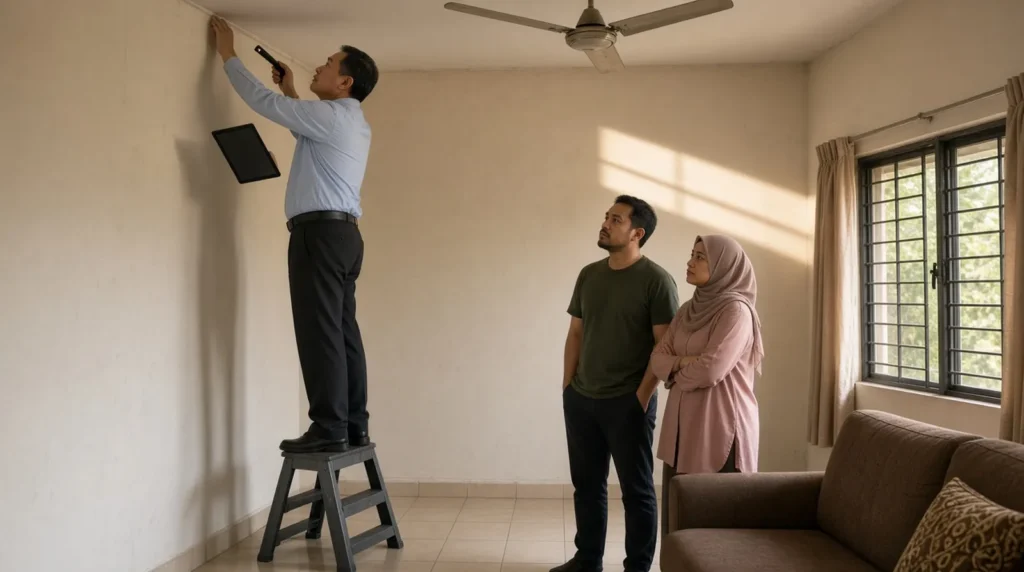
A house inspection checklist will not replace a trained inspector, but it will slow you down in the right places. In a Malaysian terrace house, bungalow or condo, problems often hide in wet areas, roofs, ceilings and wall cracks that a short viewing never reaches. A written list keeps you looking at the same things in every room, and gives you a record to compare with a later professional report.
Use a house inspection checklist to walk the structure, wet areas, roof, safety provisions and finishes in a consistent order. Then decide whether the findings are enough, or whether you need a pre-purchase building inspection before you commit.
- A checklist is a prompt, not a certificate. It helps you look systematically; it does not prove the house is free of defects.
- Cover five groups every time: structure and movement, wet areas and leaks, roof and external envelope, safety, and finishes or fittings.
- Photograph defects as you go, and note which rooms you could not access.
- Diagonal or stepped cracks, ongoing leaks, and safety issues are reasons to pause and get an engineer or inspector involved, not to “wait and see.”
- For a purchase, vacant possession, or a serious defect dispute, a walkthrough list should lead to a proper inspection report, not replace it.
01Why A Checklist Matters Before You Buy
Malaysian viewings are often short. Lights are on, furniture is in place, and there may be no time to look above a ceiling trap or along a parapet. Buyers then remember a fresh coat of paint and forget staining at a window head. A house inspection checklist malaysia buyers can reuse stops that drift, and it keeps everyone on the same headings if more than one person attends.
The same list helps after you buy. At vacant possession, and during the defect liability period, a consistent record makes it easier to notify the developer. For a subsale, it starts a conversation with your inspector or solicitor; it does not replace either. This is a practical buyer’s guide, not a statutory form or an official point system.
02What The Checklist Should Cover
Work through the property in a fixed order: outside first, then the roof or ceiling spaces you can safely reach, then each room, then wet areas, then services. The headings below are the ones we recommend you keep on every list.
Structure And Movement
Look at walls, floors, columns, beams and ceilings for cracks, bulging, sloping, or doors that no longer close. Check floors for unevenness. Outside, look at the apron, drains, and any retaining wall or slope next to the house. You are trying to notice patterns, not diagnose the cause on the spot. A hairline finish crack and a stepped crack through brickwork are not the same problem. Our guide to cracks in walls explains how to tell common types apart.
Wet Areas And Leaks
Bathrooms, kitchens, yards and balconies deserve more time than living rooms. Look for staining, blistered paint, swollen skirting, soft flooring, salt deposits and mould. Run taps and showers if you are allowed to, and check the soffit or downstairs ceiling for damp patches. Visit after rain if you can. Inter-floor leaks and ceiling stains are among the most common purchase surprises in Malaysia.
Roof And External Envelope
From the ground, look at roof tiles or metal sheets for displacement, rust, ponding or patching, and at gutters, downpipes and roof-to-wall junctions. On a high-rise unit you may only see the façade, windows and balcony soffit, but those still matter. Note cracks in external render, failed window sealant, and rust on railings or air-conditioning brackets. If there is a flat roof or an upper-floor water tank, ask how it is accessed and whether it has leaked before.
Safety
Check staircase railings, balcony balustrades, window grilles, and electrical boards you can see without opening sealed covers. In stratified buildings, look at smoke detectors or fire-door closers, and at whether escape routes are blocked. Poor stair lighting, missing handrails and corroded grille fixings belong on the list even if they feel small.
Finishes, Fittings And Services
Walk every room for workmanship: tile alignment, hollow-sounding tiles, door operation, window locks and cabinetry. Test as many switches, sockets, water points and waste outlets as you reasonably can. Note air-conditioning staining, noisy units, or dripping condensate pipes. Outside, include fencing, gates, driveways, car porches and drains. This is not a full electrical or plumbing survey. It is a structured look at what you can see and operate on the day.
Write Down What You Could Not See. Locked rooms, a sealed ceiling trap, a unit on a high floor with no roof access, or furniture covering a wall are gaps, not passing marks. A later inspector will need those notes.
03How To Use It On The Day
- Start outside and work in. Exterior defects often explain interior stains. Photograph the façade, roof edge, drains and any crack before you go indoors.
- Use the same heading in every room. Ceiling, walls, floor, windows, doors, then fittings. This is faster than wandering, and it stops you skipping bathrooms.
- Photograph with context. Take a wide shot of the room, then a close shot of the defect, and include a pen, coin or tape for scale where you can. Date the photos.
- Run water and open windows where you have permission. A dry visit can hide a leaking shower or a window that will not close.
- Note smell, occupancy and recent painting. Fresh paint can hide staining. A vacant unit is easier to inspect than a fully furnished one, but both should go on the record.
- Leave space for “needs a specialist.” If you are unsure whether a crack is structural, or whether a stain is active, write that down instead of guessing.
Take a torch, a simple tape and your phone. If you do not have safe access to a roof or ceiling space, do not improvise. Mark it as not inspected.
04What A Checklist Cannot Replace
A buyer’s list is a screening tool. It will not trace a concealed leak, measure crack movement over time, or give you a report you can use cleanly in a defect claim. Those jobs belong to a documented inspection by a competent person.
Before you sign, or before vacant possession, a pre-purchase building inspection looks at the same headings in more depth. For a new house or condo, that often sits alongside defect-liability notifications. For an older property or a whole building, a building condition assessment may be the better fit.
If you already own the property and are chasing defects during the liability period, a property defect inspection turns a walkthrough list into a formal record. The same approach applies to house and condo inspections in Petaling Jaya and Kuala Lumpur.
05Cracks And When To Slow Down
Not every crack is structural, and not every stain is a waterproofing failure. Slow down when you see:
- Diagonal or stepped cracks in walls, especially around openings or at corners.
- Cracks that continue from a wall into a floor slab or across a beam.
- Doors or windows that jam in a way that suggests the opening has moved.
- Fresh or repeated water staining after rain, or staining that returns after repainting.
- Rusting, spalling concrete, or exposed reinforcement on a soffit, column or façade.
- A slope or retaining wall next to the house with leaning, cracking or poor drainage.
Those are not automatic reasons to walk away, but they are reasons to stop relying on the checklist alone. Read the cracks in walls guide, then have the finding checked.
06After The Visit: From List To Decision
When you get home, transfer the notes into a simple table: room, heading, what you saw, photo number, and whether it is cosmetic, uncertain or urgent. In a fast market, the list at least shows which issues you would be accepting, and which ones you want a professional to review first.
Do not turn your own list into a legal notice. If you need to notify a developer, seller or management body, use a proper inspection report and the process in your contract or the defect liability period.
07Common Mistakes On The Walkthrough
- Only looking at finishes. Fresh paint and new tiles can hide leaks and cracks.
- Skipping wet areas because the bathroom looks new. That is often where the expensive problems sit.
- Ignoring the outside. Roof edges, drains and external cracks explain many interior stains.
- Leaving no record of rooms you could not enter. A gap is not a clean result.
- Diagnosing cracks on the spot without a second look. Use the list to capture them, then get advice when the pattern is worrying.
- Treating the checklist as the final inspection. For a purchase or a defect claim, commission a report.
Frequently Asked Questions
Is A House Inspection Checklist Enough Before I Buy?
It is a good first step, not a complete answer. Use it to walk the property consistently and to decide whether you need a pre-purchase inspection. For a purchase, vacant possession or a defect claim, a documented inspection is the safer record.
Can I Use The Same List For A Condo And A Landed House?
Yes, if you keep the same headings and adapt the items. A condo visit should spend more time on wet areas, windows, the façade you can see, and common-property issues that affect the unit. A landed house visit should add the roof, drains, apron, fences and any nearby slope or retaining wall.
When Should I Call An Engineer Instead Of Continuing The Walkthrough?
Pause and get advice if you see diagonal or stepped cracks, cracks that run into a slab or beam, signs of movement in doors and windows, active leaks, spalling concrete, or a distressed retaining wall. Those findings are beyond a simple tick-box list.
Should I Inspect In The Rain?
A wet-day visit is useful because leaks and poor drainage are easier to see. If you can only visit in dry weather, still look for old staining, ask about past leaks, and consider a professional inspection before you rely on a dry walkthrough.
What Should I Bring?
A torch, a simple measuring tape, your phone for photos, and a printed or digital copy of the checklist. Do not climb onto a roof or enter an unsafe ceiling space. Mark anything you could not access.
Does A Checklist Help During The Defect Liability Period?
Yes, as a way to notice and photograph defects early. Formal notification to the developer should still follow your contract and a proper inspection record, not only a personal tick list.
References

Leads building inspection, concrete assessment and defect investigation work at Pro Inspect Solution, and writes guidance for owners, JMBs/MCs, developers, contractors and engineers. LinkedIn
Need A House Or Condo Inspection In Malaysia?
Contact Pro Inspect Solution on WhatsApp or call +60 16-806 4902. Email inspectsolution.pro@gmail.com