
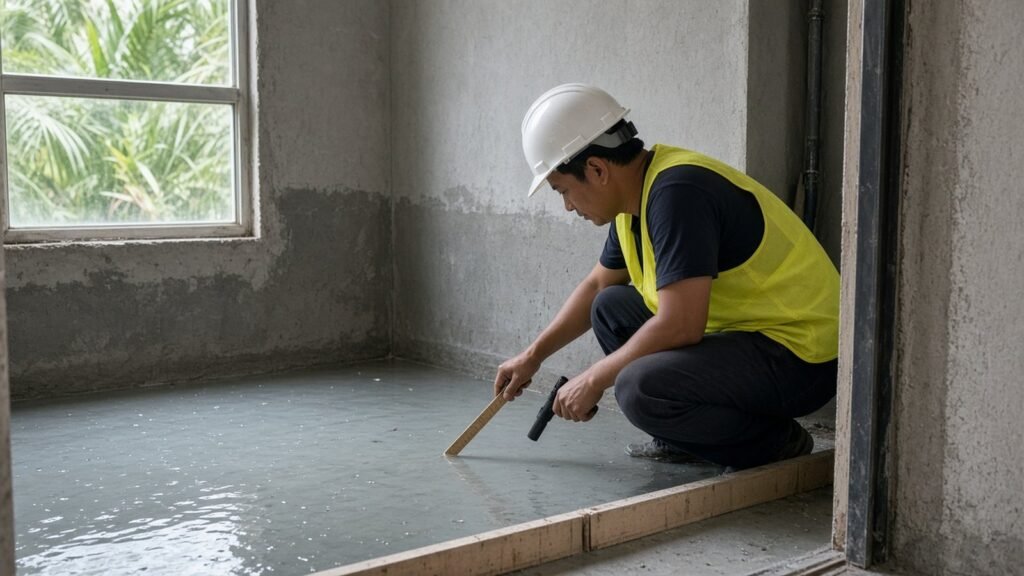
If you are building your own house, or a developer is building yours under a contract, much of the important work disappears from view within days. Foundations are backfilled, reinforcement is cast into concrete and pipes go behind plaster. A stage inspection looks at each part before it is covered.
Construction stage inspections are independent checks at key points while a new home is being built, before work is covered up. The usual stages are foundations and ground beams, reinforcement before each concrete pour, the completed structure, roof and waterproofing, building services before closing walls and ceilings, and a final handover inspection. Problems are cheaper to fix early.
01Why stage inspections matter
- Defects are cheaper to fix early. Correcting reinforcement before a pour is simple; repairing a cracked beam later is not.
- You get a record. Dated photos and notes at each stage show what was built.
- It supports the contract. Stage findings give you a clear basis to ask the contractor to rectify work before the next payment stage.
- It reduces handover surprises. Many defects found at handover started at an earlier stage.
The Principal Submitting Person and the Professional Engineer supervise the works and certify each stage (Form G) leading to the Certificate of Completion and Compliance (CCC) under UBBL 1984. An independent stage inspection is an extra check for the owner and does not replace that role or the CCC.
02The main inspection stages
| Stage | When to inspect | What is checked |
|---|---|---|
| 1. Site and setting out | Before foundation work | Setting out against approved plans, levels, site drainage |
| 2. Foundations and ground beams | Before concrete pour and backfill | Excavation, pile or footing positions, ground beam reinforcement and cover |
| 3. Reinforcement before each pour | Before columns, beams and slabs are cast | Bar sizes and spacing against drawings, laps, cover, formwork condition |
| 4. Structure complete | After the frame and slabs are cast | Cracks, honeycombing, alignment, levels |
| 5. Roof and waterproofing | Before ceilings close | Roof structure, covering, flashing, waterproofing at wet areas |
| 6. Services before closing | Before walls and ceilings are closed | Visible plumbing, drainage falls, electrical conduits |
| 7. Handover | At practical completion or vacant possession | Finishes, doors and windows, tiles, leaks, services working |
03Stage by stage
Foundations and ground beams
A ground beam ties the foundations together and supports the walls above. Before concrete is poured, check that the reinforcement matches the drawings, that bars are tied and supported with the right concrete cover, and that the formwork is clean and secure. Once backfilled, none of this can be seen again.
Reinforcement before each pour
Each column, beam and slab pour is a “hold point”. Check bar sizes, spacing, laps and cover spacers against the structural drawings before concrete arrives. Reinforcement inspection is one of the most valuable stage checks because errors are permanent after the pour.
Structure complete
After the frame is cast, look for cracks, honeycombing, exposed bars, and columns or walls out of line or level. Concerns at this stage can be investigated with non-destructive concrete tests. See concrete technology consultancy.
Roof and waterproofing
Check the roof structure and covering, flashing and gutters, and waterproofing in bathrooms, balconies and flat roofs before tiling. A ponding (flood) test on wet areas, typically 24–48 hours before tiling, checks the membrane for leaks.
Services before closing
Before walls and ceilings are closed, check visible pipe runs, drainage falls and conduit routes. Moving a pipe now is far easier than opening a finished wall later.
Handover inspection
At completion, a full property defect inspection records finishing and workmanship defects for the contractor or developer to rectify. For homes sold under the standard HDA SPA, defects can be reported during the Defect Liability Period, which is 24 months from vacant possession under HDA Schedules G and H.
04Who should book stage inspections?
- Owners building a house on their own land with a contractor.
- Buyers of a custom-built or self-build home who want an independent check.
- Small developers who want a second pair of eyes before key pours.
- Owners carrying out large extensions or rebuilds.
05Tips for owners
- Agree hold points in the contract. Write the inspection stages into the contract so the contractor gives notice before each pour.
- Keep the approved drawings on site. Inspections compare work against these.
- Ask for notice. A day or two of notice before a pour makes inspections practical.
- Keep the records. File stage reports with your payment records and drawings.
- Fix before you pay. Link stage payments to rectifying defects found at that stage, where the contract allows.
Frequently asked questions
Is a stage inspection the same as the engineer's supervision?
No. The Principal Submitting Person and the Professional Engineer supervise the works and certify each stage (Form G) leading to the Certificate of Completion and Compliance (CCC) under UBBL 1984. An independent stage inspection is an extra check for the owner and does not replace that role or the CCC.
What if a defect is found at a stage?
It is recorded with photos and reported to the contractor to rectify before the next stage. A follow-up visit confirms the fix.
Can stage inspections be done for a renovation or extension?
Yes. The same idea applies: inspect before work is covered.
What happens after the house is complete?
A handover defect inspection lists remaining defects. If you later see cracks or settlement, a structural repair consultancy review can assess them. For buying an existing home instead, see our pre-purchase property assessment guide.

Leads building inspection, concrete assessment and defect investigation work at Pro Inspect Solution, turning site findings into clear, practical guidance for owners, JMBs/MCs, developers and contractors. LinkedIn
Building a new home? Book stage inspections.
Building a new home? Contact us with your drawings and programme and we will reply with a written quotation for the stages you need.
Talk to our engineers on WhatsApp or call +60 16-806 4902. Email inspectsolution.pro@gmail.com