
By Ir Vimal, Professional Engineer | July 23, 2026
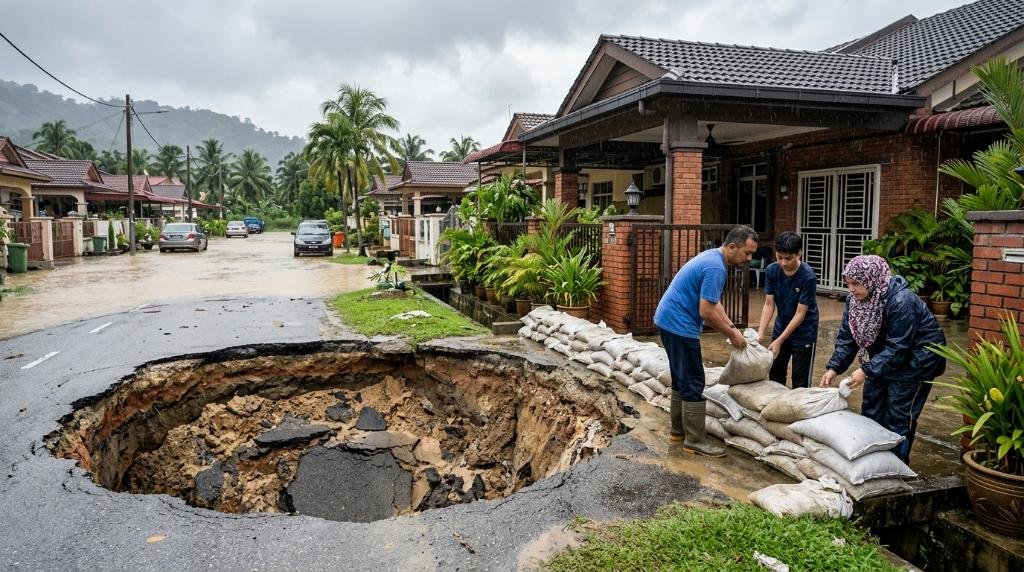
As a practicing engineer in Malaysia, I regularly encounter properties that look aesthetically flawless but hide critical geotechnical vulnerabilities. The realities of our equatorial climate and unique local geology demand more than generic home maintenance. Today, property flood risks Malaysia are escalating due to unprecedented rainfall intensity, while underlying limestone topographies continue to threaten structural integrity across the Klang Valley.
For property owners, developers, and contractors, relying solely on cosmetic fixes is a dangerous gamble. True resilience requires an intimate understanding of Malaysian engineering standards, local soil mechanics, and proactive structural forensics. This article dives into the engineering realities behind these environmental threats and offers actionable, insider perspectives on safeguarding your investments.

1. Beyond MSMA: The Reality of Recurrent Floods
Historically, Malaysian urban drainage systems were designed based on the Manual Saliran Mesra Alam (MSMA) guidelines. However, data from the Malaysian Meteorological Department (MetMalaysia) shows that recent monsoon seasons are producing rainfall volumes that drastically exceed the historical Average Recurrence Interval (ARI) used in legacy designs.
Because many mature residential areas were developed before the stringent MSMA 2nd Edition updates, they lack sufficient on-site detention (OSD) facilities. This leads to recurrent floods that do more than just ruin furniture; they drastically affect the sub-base of your property’s foundation. Hydrostatic pressure from stagnant floodwaters can weaken concrete retaining walls and accelerate the corrosion of steel reinforcements within ground beams (violating BS EN 1992 design lifespan expectations).
Engineering Mitigation for Property Owners
- Sub-soil Drainage Assessment: Instead of merely clearing surface gutters, inspect the sub-soil drainage. High water tables post-flood can cause hydrostatic uplift. Ensure your property has functional perimeter drains with appropriate gradients to municipal discharge points.
- M&E Elevation: Retrofitting homes to elevate Mechanical and Electrical (M&E) systems above the historical flood line is now standard practice in civil engineering retrofits.
2. Karst Foundations and Sinkhole Structural Damage
If you own property in Kuala Lumpur or specific parts of the Klang Valley, you are likely sitting above the Kuala Lumpur Limestone Formation. This karst topography is highly prone to subsurface dissolution when water flows through it. Unfortunately, sinkhole structural damage is rarely a sudden event; it is the culmination of long-term, invisible subsurface soil erosion.
As an engineer investigating local failures, I frequently trace sinkhole formations back to leaking underground utility pipes (like old asbestos cement water mains or broken sewerage lines). The continuous leakage washes away the fine soil particles bridging the limestone cavities, eventually causing a sudden collapse.
Early Warning Signs You Must Not Ignore
Don’t wait for a local news report to prompt action. Look for these subtle precursors of differential settlement:
- Shear Cracks: Diagonal, stair-step cracks in brickwork (especially around window frames and doors) indicate that one side of your foundation is dropping.
- Compound Subsidence: Unexplained pooling of water in your driveway or sudden dips in interlocking pavers are primary indicators of sub-soil washout.

3. Slope Engineering Failures in Hilly Terrains
Developments in hilly areas, from Penang to Hulu Klang, offer premium views but come with stringent geotechnical requirements. Under the guidelines set by the Construction Industry Development Board (CIDB), slope engineering is highly regulated. Yet, failure often happens post-handover due to poor homeowner maintenance.
A retaining wall is not just a physical barrier; it is an active structural element managing immense lateral earth pressures. The most common cause of retaining wall collapse I see in residential properties is blocked weepholes. When rainwater cannot escape from the soil behind the wall, the soil becomes saturated. The added water weight exponentially increases the active earth pressure, exceeding the wall’s ultimate limit state (ULS) designed under MS EN 1997 (Eurocode 7) standards.
Critical Maintenance Checks
- Weephole Inspection: Ensure the PVC pipes protruding from retaining walls are clear of dirt, insect nests, and vegetation. Water should flow freely from them during heavy rain.
- Surface Runoff Diversion: Never allow water from your roof or patio to discharge directly onto a natural slope or behind a retaining wall. Surface water must be channeled into lined concrete drains.
4. Ensuring Home Structural Safety: An Insider’s Approach
To better protect home structural safety, property owners must shift from a reactive mindset to a proactive one. When purchasing a sub-sale property or taking vacant possession of a new build, visual defect checks are insufficient.
Understanding structural blueprints, analyzing the integrity of the reinforced concrete framework, and knowing the geological footprint of the site are non-negotiable. Accessing independent engineering insights and structural audits, such as the resources and knowledge base provided by Pro Inspect Solution, can arm homeowners with the technical data needed to hold developers accountable during the Defect Liability Period (DLP).
Always demand your “As-Built” drawings from the developer. Should you ever need to renovate, these drawings are vital to ensure you do not accidentally compromise a load-bearing structural column while trying to achieve an open-concept living space.
5. Frequently Asked Questions (FAQ)
How can I check my property flood risks in Malaysia?
You can assess your risk by reviewing historical flood maps provided by the Department of Irrigation and Drainage (JPS) and MetMalaysia. Additionally, consult a civil engineer to evaluate the site elevation relative to adjacent rivers and the capacity of the localized MSMA drainage network.
What is the difference between shrinkage cracks and sinkhole structural damage?
Shrinkage cracks are typically fine, hairline fractures that appear on plaster surfaces due to the drying process of cement. Sinkhole or settlement damage presents as wide, diagonal “stair-step” cracks in brick walls, accompanied by sticking doors and uneven floors, indicating foundation movement.
Who is responsible for slope engineering maintenance on my property?
If the slope and retaining walls are entirely within your property boundary, the maintenance falls to the homeowner. It is crucial to maintain weepholes and surface drains to prevent soil saturation and subsequent structural failure.
Protect Your Property Investment Today
Don’t wait for recurrent floods or foundational shifts to compromise your family’s safety and your financial investment. Get a professional, objective assessment of your property’s structural integrity from registered engineering experts.
💬 WhatsApp us at 60168064902 for expert engineering consultation.
